If you are wondering whether to do cardio or weights first, the easiest place to start is with one question: What do you want to improve most?
If your priority is building strength or muscle, doing weights first is usually the more practical choice because you can approach your resistance training while you are fresh. If you are training primarily for running, cycling, rowing, or another endurance activity, cardio may deserve the first part of the workout instead. For general fitness, either order can work as long as the overall routine is balanced and you can follow it consistently.
Here is a simple way to think about it:
| Goal | Do First | Do Second |
|---|---|---|
| Strength or muscle | Weights | Cardio |
| Endurance | Cardio | Weights |
| Fat loss | Usually weights | Cardio |
| General fitness | Either | Either |
The order can affect how you perform during the session, but it is only one piece of the bigger picture. Your training quality, consistency, nutrition, total activity, and recovery will usually have a greater effect on long term progress than whether cardio happens a few minutes before or after your strength work.
Should You Do Cardio or Weights First?
For most people, the answer depends on the main goal of the workout. The activity you care about most should usually happen while you have the most energy, because fatigue from the first part of a session can affect the quality of what comes afterward.
If your goal is strength or muscle, that usually means starting with weights. A long or demanding cardio session can leave you tired before you begin lifting, which may make it harder to use the same resistance, complete quality repetitions, or maintain good technique. Starting with strength allows you to put more of your energy into the part of the workout that matters most for that goal.
Cardio first makes more sense when endurance performance is the priority. If you are training to improve your running, cycling, rowing, or another aerobic activity, completing that work first gives you a better opportunity to perform it before fatigue builds. The same principle applies in both cases: put your main goal first.
If you are training for general fitness and do not have a strong preference toward strength or endurance, the order matters less. You can improve cardiovascular fitness and strength in the same program, so the best setup may simply be the one that fits your schedule and helps you train consistently.
Should You Do Cardio or Weights First for Fat Loss?
If fat loss is your goal, the order of cardio and weights is usually less important than many people expect. Long term progress depends much more on your overall calorie balance, nutrition, total activity, training consistency, and whether you can maintain the routine over time.
For many people, doing weights first is still a practical default. Resistance training can help support strength and muscle while you are losing weight, and doing it while you are fresh may help you maintain better lifting quality. If you complete a demanding cardio workout first and arrive at the weights already fatigued, it may be harder to use your normal resistance or perform the same number of quality repetitions.
Cardio still has an important role because it can increase total activity and support cardiovascular fitness. Walking, cycling, running, rowing, and other aerobic activities can all fit into a fat loss plan, but there is no requirement to perform them before lifting for them to be useful.
Doing cardio first also does not automatically mean you will lose more body fat. The fact that your body may use different fuel sources during a particular workout does not mean the exercise order guarantees greater long term fat loss. For most people, a sustainable combination of strength training, cardio, nutrition, and regular activity matters much more.
Should You Do Cardio or Weights First for Muscle Growth and Strength?
If building muscle or getting stronger is the main goal, weights first is usually the better choice. Strength training requires enough energy to use appropriate resistance, perform controlled repetitions, and maintain consistent technique, so completing it before a demanding cardio session can help protect the quality of your lifting.
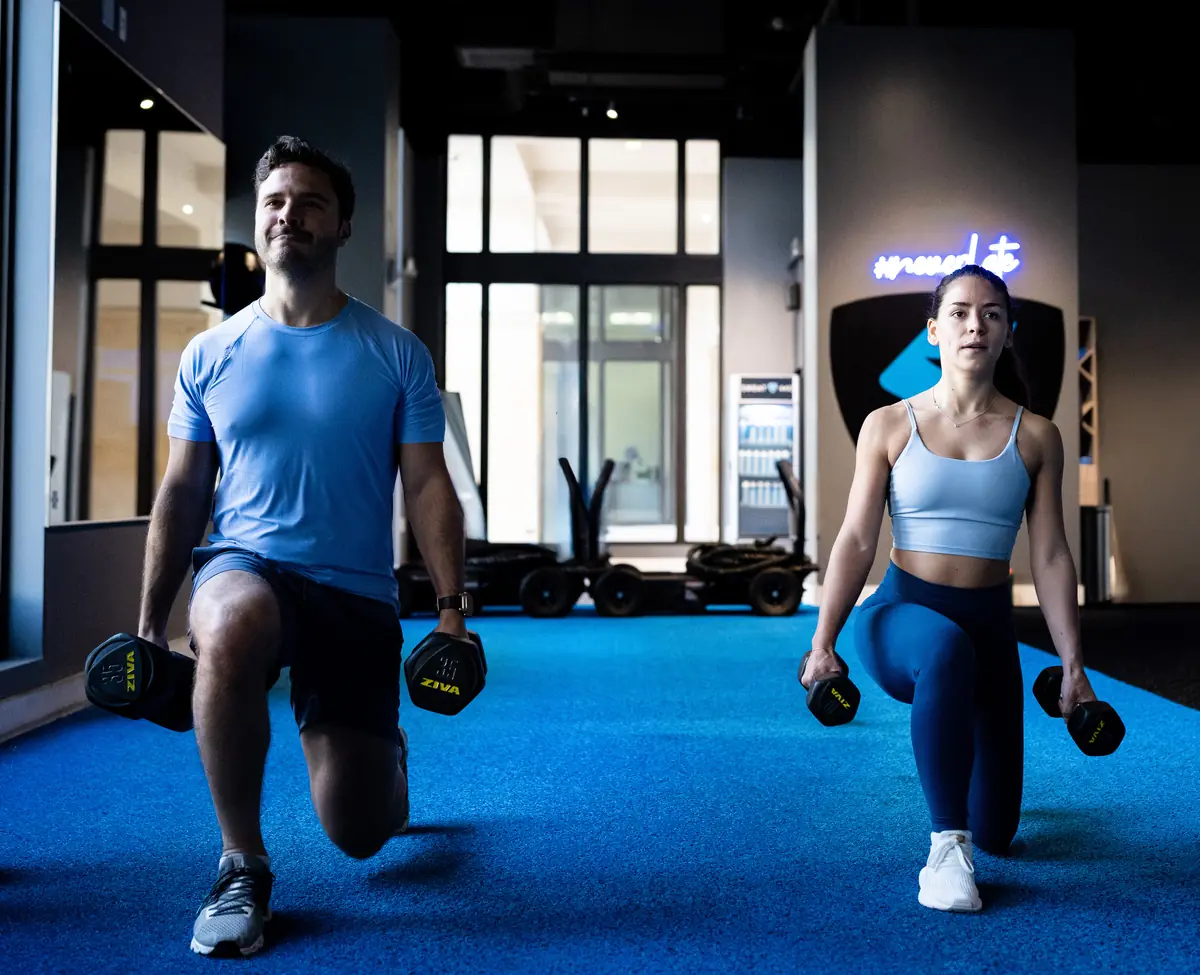
That does not mean cardio has to disappear from the program. You can build muscle and improve cardiovascular fitness at the same time. The bigger question is whether the amount and intensity of cardio you are doing creates so much fatigue that your strength sessions begin to suffer.
For many people, strength training followed by moderate cardio is an efficient way to train both qualities in the same session. If both parts of the workout are going to be demanding, separating them across different times of day or different days may make it easier to give each one more energy.
The goal is not to treat cardio as something that ruins muscle growth. It is to organize your training so your highest priority receives the best effort.
Does Doing Cardio Before Lifting Affect Strength Performance?
It can, especially when the cardio session is long, intense, or relies heavily on the same muscles you plan to use during strength training.
For example, hard cycling before a lower body strength workout may leave your legs tired before you start squats, deadlifts, or lunges. That fatigue can make your normal resistance feel heavier and may reduce the number of quality repetitions you can perform.
The same idea applies to other combinations. A demanding rowing workout before pulling exercises may affect your back and arms, while a hard run before lower body work may make your legs feel less prepared for challenging strength exercises.
A short warmup is different. Five or ten minutes of easy walking, cycling, or rowing can help prepare you to move without creating the same amount of fatigue as a full cardio workout. Doing weights first does not mean skipping your warmup. It simply means avoiding a long or demanding cardio session before lifting when strength performance is the main goal.
Can You Do Cardio and Weights in the Same Workout?
Yes. For most people, combining cardio and weights in the same workout is completely reasonable.

The key is deciding which part of the session deserves priority rather than trying to make both portions as difficult as possible every time. If strength or muscle growth matters most, perform your resistance training first and use cardio afterward. If endurance is the priority, complete the main cardio work first and make the strength portion more manageable.
This approach can be especially useful when you have limited time. Instead of creating separate gym visits for strength and cardio, you can combine both into one session and still make progress as long as the total workload fits your fitness level and recovery.
You also do not need to finish every combined workout exhausted. A strength focused session might end with 10 or 20 minutes of moderate cardio rather than another maximum effort block. If endurance is the priority, the strength work that follows can be shorter and focused on a few important movements.
For general fitness, convenience and consistency often matter more than creating a perfect theoretical split.
Is It Better to Separate Cardio and Strength Training?
You do not have to separate cardio and strength training for them to be effective. For general fitness, combining both in the same session can be practical and efficient.
Separating them becomes more useful when each type of training is demanding or when performance is especially important. Someone focused heavily on strength, power, sprinting, or running performance may benefit from having more time between sessions so fatigue from one activity does not reduce the quality of the other.
That could mean performing cardio and strength several hours apart on the same day or placing them on different days entirely. The best choice depends on your schedule, priorities, and how well you recover.
There is also no strong reason to separate them simply because your goal is fat loss. Your total activity and nutrition matter much more than whether the two types of exercise happen together or several hours apart.
Use the schedule that allows you to train well enough to keep showing up.
Should Beginners Do Cardio or Weights First?
Beginners can do either, but weights first is often a useful starting point when learning strength exercises.
Strength movements such as squats, presses, rows, and hinges usually require more coordination and attention than steady cardio. Learning those movements while you are fresh can make it easier to focus on your setup, range of motion, resistance, and technique without trying to solve those things while already fatigued.
That does not mean every beginner should automatically lift first. Someone whose main goal is improving running or another endurance activity may still prefer to start with cardio. The same principle continues to apply: put your main goal first.
Beginners also do not need to make both portions of the workout extremely difficult. A simple session might include a brief warmup, a focused strength workout, and moderate cardio afterward. If endurance is the priority, the order can be reversed.
The goal during the first few months is to build confidence, learn good movement habits, and create a routine you can repeat consistently.
Example Cardio and Strength Workouts
The best workout structure depends on what you want to prioritize, but it does not need to be complicated.
Strength First Example
If strength is the priority, start with 5 to 10 minutes of easy walking, cycling, or rowing to warm up. Then spend around 20 to 30 minutes on resistance exercises such as a squat or leg press, chest press, row, shoulder press, and core exercise.
Once the strength portion is complete, you can finish with 10 to 20 minutes of moderate walking, cycling, rowing, or another aerobic activity. This setup lets you complete the most important strength exercises before cardio related fatigue has a chance to reduce your lifting performance.
Cardio First Example
If endurance is the priority, begin with a short easy warmup and then complete around 20 to 30 minutes of your planned aerobic work.
Afterward, move into a shorter resistance training session using a few key movements such as a squat variation, press, row, and core exercise. If the cardio session was particularly challenging, keep the strength portion manageable rather than trying to make both halves of the workout maximum effort.
General Fitness Example
If your goal is overall fitness, you have more flexibility. You might warm up for five minutes, spend 20 to 25 minutes strength training, and finish with 10 to 15 minutes of moderate cardio.
You could also reverse the order if that feels better or fits your goals. The most important thing is choosing a structure that allows you to perform both parts of the workout with reasonable quality and maintain the routine over time.
How Does SWEAT440 Combine Strength and Conditioning?
SWEAT440 uses a strength based approach while giving conditioning its own role throughout the weekly program. Instead of treating every workout as a choice between cardio and weights, the schedule organizes different training priorities across the week.

Strength focused days emphasize resistance training. Lower body sessions include movements such as squats, deadlifts, hinges, and other exercises that develop lower body strength, while upper body sessions focus on pressing, pulling, and arm work. This gives strength training a clear place in the schedule rather than trying to squeeze it into the end of every conditioning workout.
Conditioning is also built into the program through athletic conditioning and hybrid full body sessions. Those workouts provide opportunities to develop endurance and overall fitness while still keeping strength as an important part of the broader training approach.
SWEAT440 workouts last 40 minutes and rotate through four stations. Coaches and screens guide members through the exercises, pacing, and transitions, which creates a structured environment without requiring you to design your own strength and cardio plan before every session.
Progressive overload is also part of the programming, so the goal is not simply to repeat the same workload indefinitely. As your strength and fitness improve, the challenge can increase through resistance, exercise difficulty, pacing, or total training demand.
Coaching can also help manage effort. Every workout does not need to feel maximal to be productive, and having guidance with form, pacing, and exercise modifications can make it easier to train consistently across both strength and conditioning sessions.
Frequently Asked Questions
Is it better to do cardio before or after weights?
If strength or muscle growth is your main goal, weights first is usually the more practical choice because you can lift before fatigue builds. If endurance is your priority, cardio first can make more sense because it allows you to focus your best effort on that activity.
Should I do cardio or weights first for fat loss?
The order matters less than your overall calorie balance, nutrition, activity level, and consistency. For many people, weights first is still a useful default because it allows them to prioritize strength training before cardio related fatigue builds.
Can cardio before weights make me weaker?
A long or demanding cardio session can temporarily reduce strength performance because the muscles may already be fatigued. A short and easy cardio warmup is different and can help prepare you for lifting.
Can I do cardio and weights on the same day?
Yes. You can perform them in the same workout or separate them across the day. The better option depends on your schedule, goals, and how demanding each session is.
Does cardio hurt muscle growth?
Not automatically. Cardio and strength training can coexist in the same program. Problems are more likely when cardio volume or intensity becomes high enough that it repeatedly reduces strength performance or recovery.
Should beginners do weights or cardio first?
Weights first can be a practical option when beginners are learning strength exercises or want to get stronger. If improving endurance is the primary goal, cardio can come first instead.
How long should I do cardio after weights?
There is no single ideal duration. For a combined workout, around 10 to 20 minutes of moderate cardio can be a practical option, but the appropriate amount depends on your goals, available time, and overall fitness level.
Is it better to separate cardio and weights?
Not necessarily. Separating them can help when both sessions are demanding or performance is a major priority, while combining them can work very well for general fitness and convenience.
Final Takeaway: Cardio or Weights First?
If you are deciding between cardio or weights first, start with the goal that matters most.
Choose weights first when strength or muscle growth is the priority because you can perform your resistance training before fatigue builds. Choose cardio first when endurance performance is the main goal. If you are training for general fitness, either order can work, so choose the setup that fits naturally into your routine.
For fat loss, try not to focus too heavily on the sequence. Your overall activity, nutrition, strength training, cardiovascular exercise, and consistency matter far more than whether cardio happens immediately before or after your weights.
You can combine cardio and strength in the same workout or organize them across different days. The best setup is the one that lets you give quality effort to your highest priority while still recovering well enough to train consistently.
At SWEAT440, strength and conditioning are organized throughout the week so both have a clear role without requiring you to plan every workout yourself.
Ready to put that approach into practice? Find a SWEAT440 studio near you and book a class to experience structured strength and conditioning in a 40 minute workout. Book your first class free and experience the difference.