If you are strength training and trying to gain muscle, protein probably comes up a lot. How much do you actually need? Does every meal need to be packed with it? And do you really need a protein shake as soon as your workout ends?
The good news is that protein does not have to be complicated.
For many people who strength train, around 1.4 to 2.0 grams of protein per kilogram of body weight per day can provide a practical range. Around 1.6 grams per kilogram is a useful target for many adults.
But protein is only part of the equation. Building muscle also depends on consistent resistance training, enough overall nutrition, recovery, and gradually challenging your muscles over time.
Here is how to put it all together.
How Much Protein Do You Need to Build Muscle?
For many people who strength train, around 1.4 to 2.0 grams of protein per kilogram of body weight per day is a useful range for supporting muscle growth.
Around 1.6 grams per kilogram can be a practical target for many adults.
For someone who weighs 70 kilograms, that would be about 112 grams of protein per day. Depending on individual needs, an appropriate intake could fall somewhere around 98 to 140 grams.
There is no single number that works for everyone. Your body weight, training, calorie intake, age, and goals can all influence how much protein makes sense for you.
Why Protein Matters for Muscle Growth
Strength training challenges your muscles. Protein provides amino acids your body can use during the repair and adaptation process that follows.
That distinction matters.
Protein supports muscle growth, but it does not create the training stimulus. Your muscles still need to be challenged consistently if you want them to adapt.
Why More Protein Is Not Always Better
It is easy to assume that if some protein is good, more must be better.
That is not how muscle growth works.
Once you are already eating enough protein to support your training, adding substantially more does not guarantee additional muscle growth. Your workouts, overall nutrition, sleep, recovery, and consistency still matter.
The goal is not to eat the most protein possible. It is to eat enough to support what you are doing in the gym.
How Much Protein Should You Eat Per Day to Build Muscle?
The easiest way to estimate daily protein needs is to use your body weight instead of following one fixed number.

Around 1.6 grams of protein per kilogram of body weight can be a helpful starting point for many people focused on building muscle.
For example:
55 kilograms: about 88 grams per day
70 kilograms: about 112 grams per day
85 kilograms: about 136 grams per day
100 kilograms: about 160 grams per day
Think of these as practical examples, not strict requirements. Your ideal intake may be somewhat higher or lower depending on your goals, training, calorie intake, and individual needs.
Why Body Weight Matters
A 55 kilogram person and a 100 kilogram person are unlikely to need the exact same amount of protein.
Using body weight gives you a more personalized starting point without making the calculation complicated.
How Strength Training Affects Protein Needs
The general protein recommendation for adults is designed to meet basic nutritional needs. Someone who regularly performs resistance training may benefit from a higher intake because training places additional demands on muscle repair and adaptation.
That does not mean protein does the work for you.
Strength training creates the stimulus. Protein helps support your body's response to it.
How Much Protein Do You Need Per Meal for Muscle Growth?
You do not need to squeeze your entire daily protein target into one or two meals.
For many adults who strength train, around 20 to 40 grams of protein in a meal can be a practical starting point.
Another way to estimate it is around 0.4 grams per kilogram of body weight per meal.
For example:
60 kilograms: about 24 grams per meal
70 kilograms: about 28 grams per meal
80 kilograms: about 32 grams per meal
90 kilograms: about 36 grams per meal
Why Spreading Protein Across the Day Can Help
Spreading protein across several meals can make your daily target much easier to reach.
If you are aiming for around 120 grams per day, for example, four meals containing roughly 30 grams each may feel more manageable than trying to eat most of that protein at dinner.
You do not need every meal to be identical. The goal is simply to include meaningful sources of protein throughout your day.
Can Your Body Use More Than 30 Grams of Protein at Once?
Yes.
The common claim that your body can only absorb 20 or 30 grams of protein at one time is misleading.
Your body can digest and absorb larger amounts. The better question is how much protein in one meal effectively supports muscle protein synthesis.
For most people, total daily protein intake is still more important than trying to make every meal mathematically perfect.
Does Protein Timing Matter for Muscle Growth?
Protein timing can matter, but probably not as much as you have been led to believe.
Your total daily protein intake is more important than hitting an exact post workout window.
Protein before training can work. Protein after training can work too.
If you ate a protein rich meal before your workout, there is no need to rush to drink a shake the second your session ends. If several hours have passed since your last meal, eating protein afterward can be a practical choice.
Do You Need Protein Immediately After a Workout?
No.
You do not need to drink a protein shake within 30 minutes of finishing your workout to support muscle growth.
The opportunity to support recovery lasts longer than that.
A more realistic approach is to eat protein throughout the day and have a protein containing meal reasonably close to your workout when it fits your schedule.
What Matters More Than Exact Timing?
Consistency.
When you are figuring out how much protein to build muscle, getting enough across the whole day matters more than stressing about the clock.
Nutrition should support your routine, not make it harder to maintain.
What Are the Best Protein Sources for Building Muscle?
There is no single best protein food.
The best options are the ones that provide meaningful protein, fit your preferences, and make it easier to reach your daily target consistently.
Animal based options can include:
- Eggs
- Greek yogurt
- Cottage cheese
- Milk
- Chicken
- Turkey
- Fish
- Lean beef
Plant based options can include:
- Tofu
- Tempeh
- Edamame
- Beans
- Lentils
- Peas
- Chickpeas
- Seitan
- Nuts
- Seeds
Can Plant Protein Build Muscle?
Yes.
Plant protein can absolutely be part of a muscle building diet.
Some plant proteins contain different amounts of essential amino acids or are digested differently than many animal proteins. That does not mean they cannot support muscle growth.
Eating enough total protein and including a variety of plant protein sources can make a plant focused approach work well.
Why Variety Matters
Protein is important, but it should not be the only thing on your plate.
A varied diet can provide carbohydrates for training, fats, fiber, vitamins, and minerals alongside protein.
You might have eggs at breakfast, Greek yogurt later in the day, tofu or chicken at lunch, and lentils or fish at dinner.
There is no need to find one perfect food and eat it every day. Build a pattern that works for you.
Do Protein Shakes Help Build Muscle?
They can, but you do not need them.
The main advantage of a protein shake is convenience.
A shake may be useful when:
- You are short on time
- You do not have a meal available after training
- You struggle to reach your daily protein target with food
- You want an easy source of protein between meals
If a shake helps you meet your needs consistently, it can be useful. If you already get enough protein from your meals, there is no rule saying you need one.
Are Protein Shakes Better Than Food?
Not necessarily.
Whole foods can provide plenty of protein while also giving you other useful nutrients.
Greek yogurt provides protein and calcium. Fish can provide protein and beneficial fats. Beans and lentils provide protein along with fiber and carbohydrates.
A shake can fill a gap. It does not need to replace a balanced meal.
Do You Need a Shake After Every Workout?
No.
Adding a shake after every session does not automatically mean you will build more muscle.
Use protein shakes because they are convenient, not because you think muscle growth depends on them.
Can You Eat Too Much Protein?
Yes, you can eat more protein than you actually need.
For healthy adults, higher protein intake has not consistently been shown to harm kidney function in shorter term research. At the same time, eating far beyond what you need does not appear to provide extra muscle building benefits.
This is another reason to focus on an appropriate intake rather than chasing the highest possible number.
Why More Is Not Always Better
Once your protein intake is already supporting your training and recovery, adding significantly more does not necessarily lead to more muscle.
It can also make your overall diet less balanced if protein regularly pushes out carbohydrates, fruits, vegetables, fiber, and healthy fats.
Those nutrients matter too, especially when you are training regularly.
When Individual Health Considerations Matter
Protein needs can change when certain medical conditions are present.
People with kidney disease, for example, may need individualized protein recommendations based on their condition and treatment.
If you have a medical condition that affects nutrition or kidney function, getting guidance from a qualified health professional is a better approach than following a general target.
How Does SWEAT440 Support Muscle Building Through Strength Training?
Knowing how much protein to build muscle is useful, but nutrition works best when there is a consistent training stimulus behind it.

That is where strength training comes in.
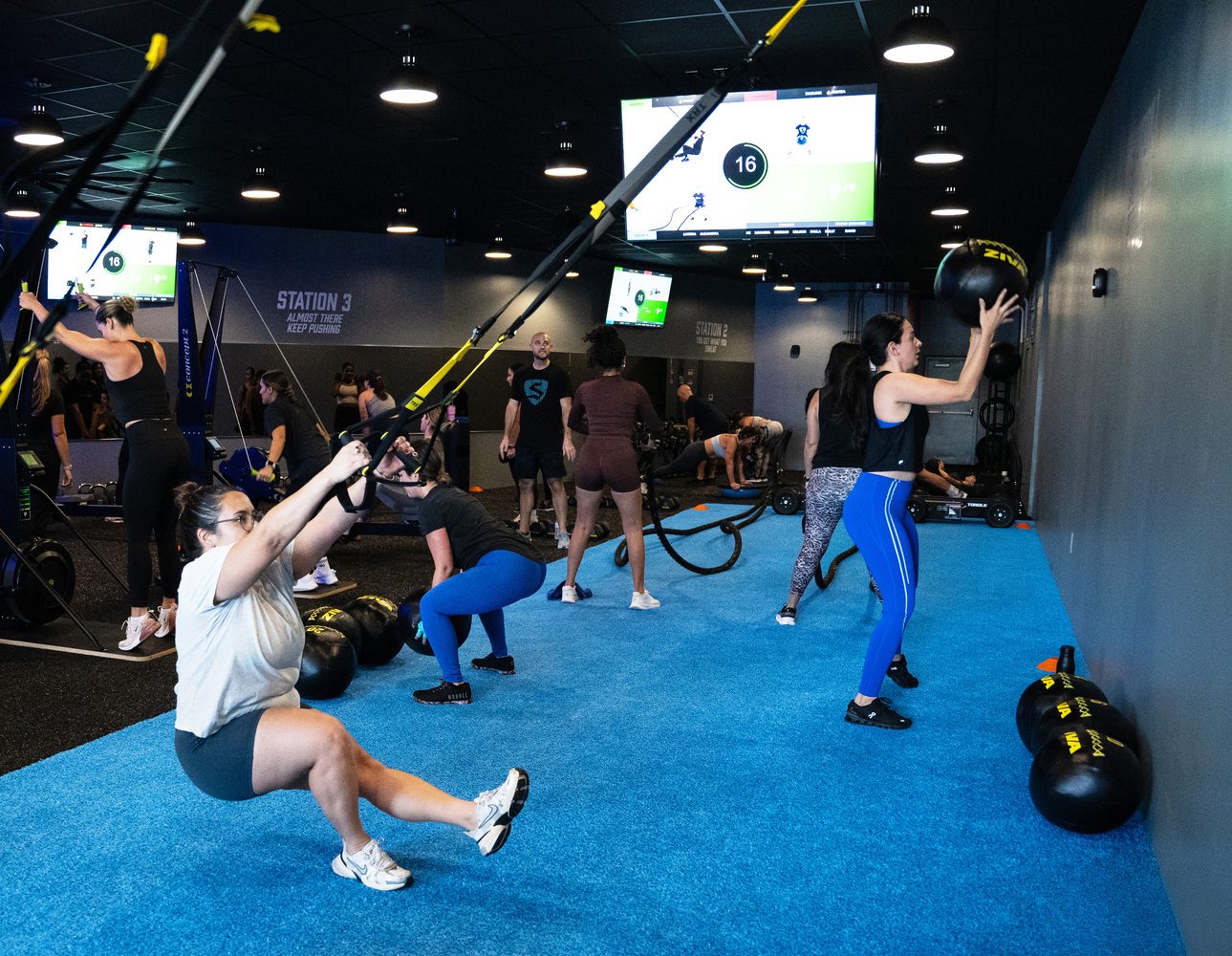
SWEAT440 workouts are 40 minutes long and rotate through four stations. Weekly programming includes dedicated upper body and lower body strength sessions along with athletic conditioning and full body training.
Progressive Training Matters
Your muscles need continued challenge if you want them to adapt.
SWEAT440 programming incorporates progressive overload, which means the training stimulus can build as you get stronger.
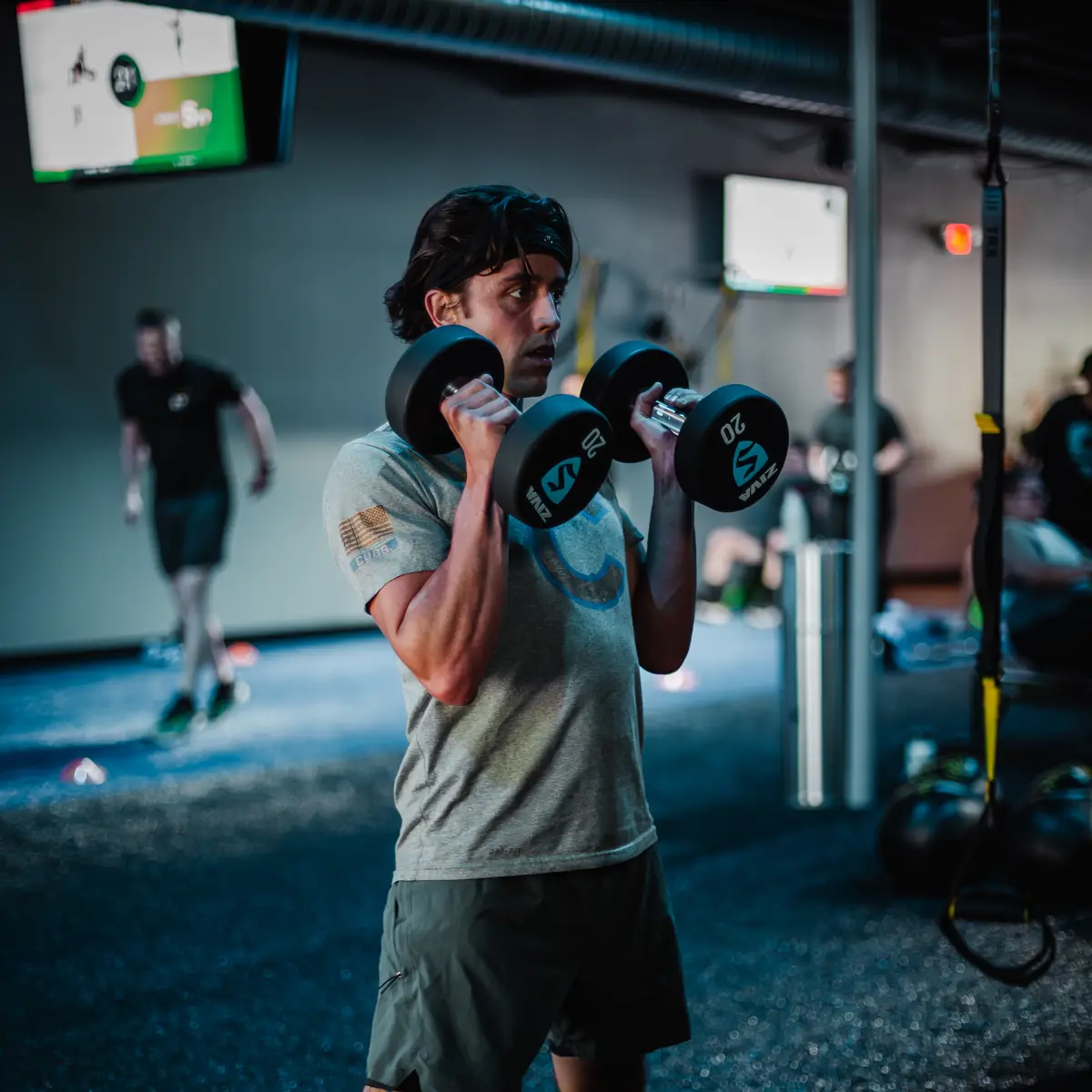
Movements such as squats, deadlifts, presses, and pulls also allow you to train multiple muscle groups while developing practical strength.
Coaching Can Help You Train at the Right Level
Progress does not come from simply lifting the heaviest weight you can find.
Good technique, appropriate resistance, and consistency matter.
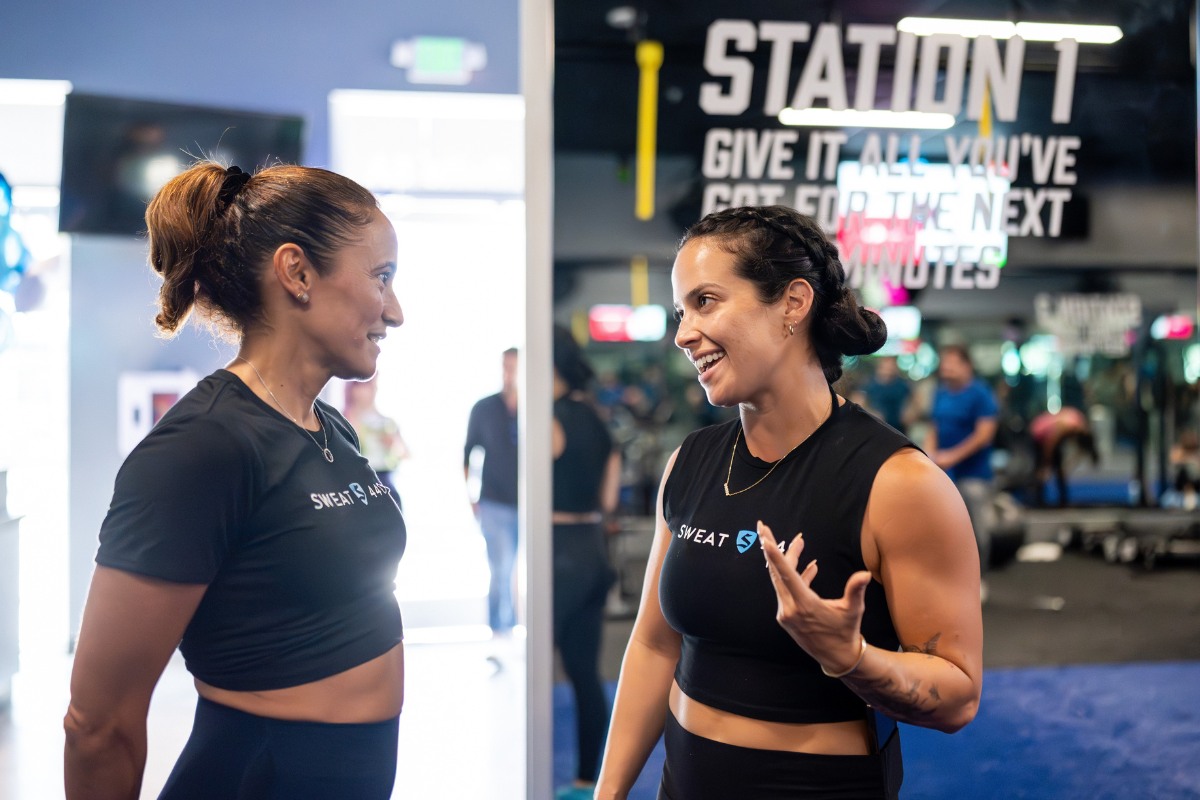
SWEAT440 coaches guide form and pace throughout the workout, while exercise modifications help beginners and more experienced members train at a level that makes sense for them.
That is how training and nutrition fit together.
Protein supports recovery and adaptation. Strength training gives your body a reason to adapt in the first place.
Frequently Asked Questions About Protein and Muscle Growth
How much protein do I need to build muscle?
For many adults who strength train, around 1.4 to 2.0 grams of protein per kilogram of body weight per day is a practical range. Around 1.6 grams per kilogram can be a useful target for many people.
Is 100 grams of protein enough to build muscle?
It can be. Whether 100 grams is appropriate depends on your body weight and individual needs. A smaller person may reach a useful target with 100 grams, while a larger person may need more.
How much protein should I eat in one meal?
Around 20 to 40 grams per meal can be a practical starting point for many adults. Body size, age, and total daily protein needs can affect the amount that makes sense for you.
Do I need protein immediately after lifting weights?
No. Protein before or after training can both support muscle growth. Your overall daily intake matters more than hitting a strict post workout window.
Can I build muscle with plant protein?
Yes. Plant based protein can support muscle growth when you eat enough total protein and include a variety of protein sources.
Do I need protein shakes to gain muscle?
No. Protein shakes can be convenient, but they are not required if your regular meals already provide enough protein.
Can eating more protein make me gain muscle faster?
Not necessarily. Once your intake is already sufficient, adding substantially more protein does not guarantee greater muscle growth.
Final Takeaway: Protein Supports Muscle Growth, but Training Comes First
If you are trying to figure out how much protein to build muscle, keep the starting point simple.
For many people who strength train, around 1.4 to 2.0 grams of protein per kilogram of body weight per day can provide a useful range, with roughly 1.6 grams per kilogram serving as a practical target for many adults.
From there, focus on habits you can actually maintain. Include protein throughout the day, choose foods you enjoy, use shakes when they are convenient, and do not worry about making every meal perfect.
Most importantly, give that protein something to support.
Consistent resistance training provides the stimulus your muscles need to adapt. Nutrition and recovery help you respond to that work.
SWEAT440 combines structured strength training, progressive programming, coaching, and exercise modifications in 40 minute sessions designed to help you train consistently.
Ready to put your nutrition and strength training into practice? Find a SWEAT440 studio near you and book a class to start building a routine you can keep progressing.
Book your first class free and experience the difference.