Body recomposition is about changing what your body is made of, not just making the number on the scale go down. The goal is to reduce body fat while maintaining or building lean mass through consistent strength training, supportive nutrition, and enough recovery.
You do not need an extreme diet or an advanced workout plan to get started. For many beginners, a steady routine built around strength training, cardio, balanced nutrition, and gradual progression can provide a practical foundation for body recomposition.
What Is Body Recomposition and How Does It Work?
Body recomposition is the process of reducing body fat while maintaining or building lean mass. Because those changes can happen at the same time, your body can look and perform differently even when your total weight changes very little.
Strength training plays an important role because it gives your body a reason to maintain and develop lean tissue. As exercises gradually become more challenging, your muscles are given a consistent stimulus to adapt.
Nutrition matters too. Your total calorie intake, protein intake, and overall eating habits can affect how well your body supports training, recovery, and changes in body composition.
What most people miss is that body recomposition is not simply another name for weight loss. Traditional weight loss focuses mainly on reducing total body weight. Body recomposition focuses on changing the balance between fat mass and lean mass.
That is why the scale does not tell the whole story. You may become stronger, notice changes in measurements, or see your clothes fit differently without experiencing a large change in body weight.
Body recomposition is also gradual. Training experience, nutrition, recovery, starting body composition, and consistency can all affect how quickly you notice progress.
Can You Lose Fat and Gain Muscle at the Same Time?
Yes, you can lose fat and gain muscle at the same time, although how easily that happens depends on your training experience, nutrition, starting body composition, and consistency.
Strength training is one of the most important parts of body recomposition because it gives your muscles a reason to adapt. While you work toward reducing body fat, resistance training can help you maintain or build lean mass.
Nutrition needs to support that process. Adequate protein and enough overall nutrition can help your body recover from training and support muscle development. Cutting calories too aggressively can make it harder to train well and preserve lean mass.
Beginners may have a strong opportunity to experience body recomposition because strength training creates a new stimulus for the body. More experienced lifters can also make progress, but the process may require greater attention to training, nutrition, and recovery.
Cardio can support your routine by contributing to overall activity and fat loss, but it does not replace strength training when preserving or building muscle is part of the goal.
Losing fat and building muscle are not always separate phases. Both can happen together, but the process usually works best when the focus is on steady progress rather than trying to make the scale drop as quickly as possible.
What Is the Best Workout for Body Recomposition?
The best workout for body recomposition should make strength training the foundation while using cardio to support overall fitness and fat loss.

You do not need an advanced program to make progress. A balanced strength routine can include squats, lunges, hip hinge movements, upper body pushes and pulls, and core exercises.
For many beginners, training the major muscle groups two to three times per week can provide a practical starting point. The exact schedule can vary depending on your experience, recovery, and overall activity.
Cardio can also support body recomposition by increasing overall activity and improving cardiovascular fitness. Walking, cycling, rowing, and other aerobic activities can complement strength training without replacing it.
Progression matters just as much as exercise selection. As your strength improves, you can gradually increase resistance, complete more controlled repetitions, or move to a more challenging exercise variation.
The best workout is not necessarily the one that burns the most calories. Body recomposition also depends on maintaining or building lean mass, which is why strength training should remain a central part of the routine.
The goal is to follow a program you can maintain consistently. Regular strength training, appropriate cardio, gradual progression, and enough recovery can provide a strong foundation over time.
How Often Should You Work Out for Body Recomposition?
For many beginners, strength training two to three times per week can provide a practical foundation for body recomposition. This gives you regular opportunities to challenge your muscles while still leaving room for recovery.

Full body strength workouts can be especially useful for beginners because they allow you to train the major muscle groups several times throughout the week without needing a complicated split routine.
Recovery matters because your muscles need time to respond to the training you have completed. You do not need to challenge the same muscles intensely every day to make progress.
Cardio and general activity can also fit around your strength workouts. Walking, cycling, rowing, or other aerobic exercise can support cardiovascular fitness and overall activity while strength training remains the foundation for maintaining or building lean mass.
More workouts do not automatically mean faster body recomposition. A schedule you can follow consistently is more useful than an aggressive plan that leaves you too fatigued to train well or maintain over time.
The goal is to build a weekly routine that gives your muscles a regular strength training stimulus, includes enough recovery, and fits realistically into your life.
What Should You Eat for Body Recomposition?
Eating for body recomposition means giving your body enough nutrition to support strength training while keeping your calorie intake aligned with your goal.
You do not need an extreme diet or a rigid meal plan to make progress.
Protein is especially important because it supports muscle repair and recovery from strength training. Including a meaningful protein source throughout the day can help support lean mass while you work toward reducing body fat.
Your total calorie intake also matters. If fat loss is part of your goal, you may need to consume fewer calories than you use. Cutting calories too aggressively, however, can make it harder to train well, recover, and maintain lean mass.
A balanced diet should also include carbohydrates, dietary fats, fruits, vegetables, and other nutrient rich foods. Carbohydrates can help support training energy, while fats and a varied diet contribute to overall nutrition and recovery.
Body recomposition is not created by protein alone. Nutrition works together with resistance training, recovery, and consistency.
You also do not need to eliminate entire food groups or follow a perfect diet. A sustainable approach that includes enough protein, appropriate calorie intake, and balanced food choices can provide a stronger foundation over time.
How Long Does Body Recomposition Take?
Body recomposition does not follow one exact timeline. Measurable changes can begin within several weeks, but more noticeable changes usually require months of consistent training, nutrition, and recovery.
Strength improvements may show up before major physical changes. You might notice that an exercise feels easier, that you can use more resistance, or that your technique feels more controlled before you see a dramatic difference in body composition.
Changes in fat mass and lean mass also tend to happen gradually. An eight or twelve week training period should not be treated as a deadline for reaching a final result.
Your starting point also matters. Training experience, nutrition, recovery, starting body composition, and consistency can all influence the rate of change.
The scale can make progress feel slower than it actually is. If you are losing fat while maintaining or building lean mass, your total body weight may not change dramatically even though your body composition is improving.
Look at progress over a longer period. Strength, measurements, how your clothes fit, and changes in training performance can all provide useful information alongside body weight.
How Do You Know if Body Recomposition Is Working?
You can tell body recomposition is working by looking at more than your body weight. Strength improvements, body measurements, clothing fit, and changes in body composition can all provide useful signs of progress.

One of the clearest training based signs is getting stronger. If you can gradually use more resistance, complete more controlled repetitions, or perform exercises with better technique, your strength is improving even if the number on the scale stays similar.
Body measurements can also help. Changes in waist circumference or other measurements may show progress that is not obvious from body weight alone.
How your clothes fit can provide another practical clue. If your body weight stays relatively stable while your waist measurement decreases or your clothes fit differently, that may be consistent with changes in body composition.
What most people miss is that the scale combines everything into one number. Losing fat while maintaining or building lean mass can result in a much smaller change in total body weight than traditional weight loss.
That is why it is more useful to look at several indicators together. Strength, measurements, training performance, clothing fit, and body composition testing when available can provide a more complete picture.
Body recomposition is best evaluated through trends rather than individual readings. Give your routine enough time to work and focus on whether your strength, performance, and body composition are moving in the right direction over time.
How Does SWEAT440 Support Body Recomposition?
SWEAT440 can support body recomposition by giving you structured strength training, coaching, and a consistent routine, while nutrition and recovery remain important parts of the process.
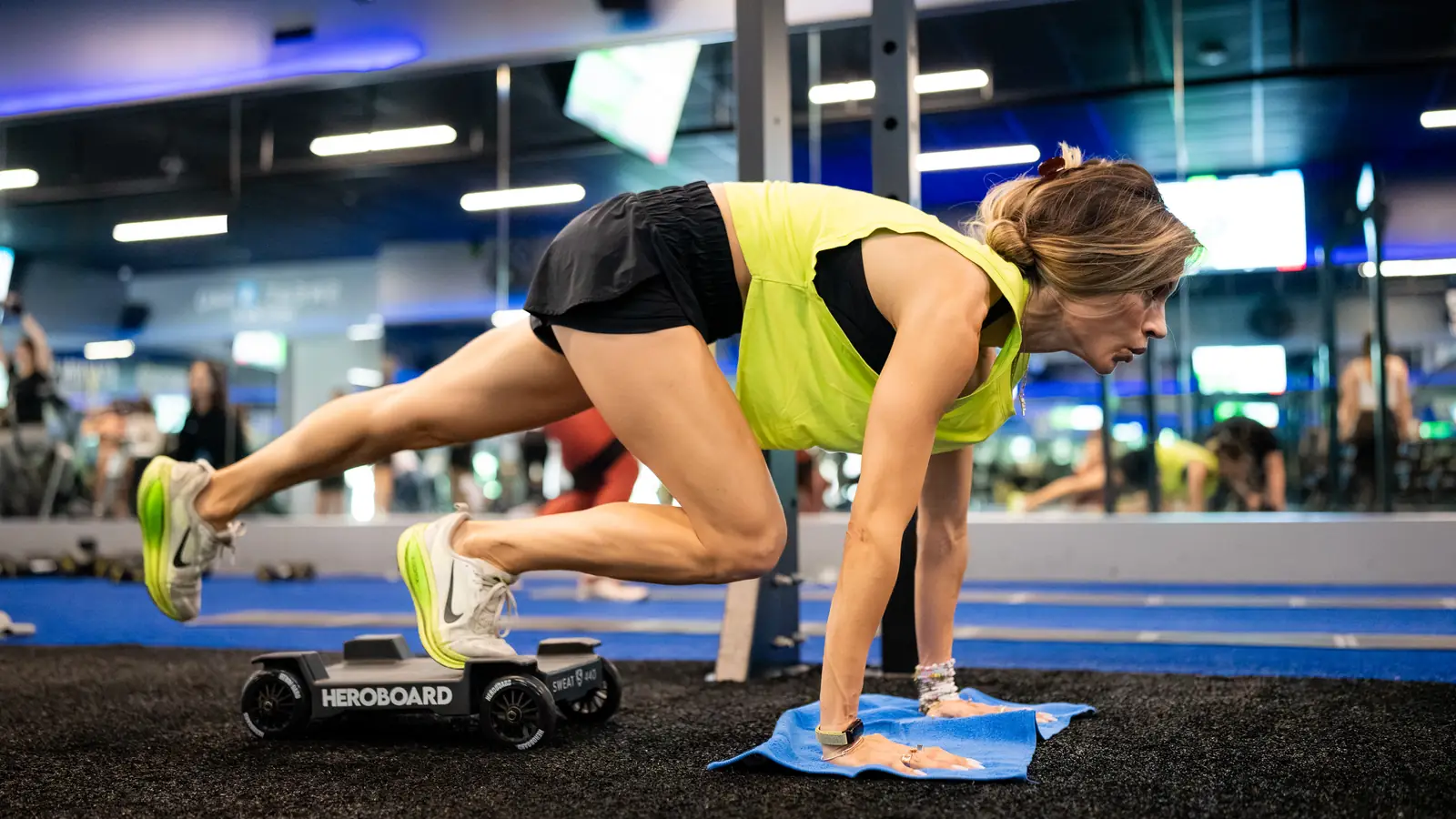
At SWEAT440, structured 40 minute, coach led workouts give you a clear plan when you arrive. Strength focused sessions create regular opportunities to challenge your major muscle groups and continue building strength over time.
Coaches can provide exercise guidance and modifications when appropriate. A beginner may start with lighter resistance or a simpler variation, while someone with more experience can gradually increase the challenge as their strength improves.
Consistency matters because body recomposition develops through repeated training rather than occasional difficult workouts. Having a structured routine can make it easier to keep strength training part of your week without designing every session yourself.
Strength training is only one part of body recomposition. Nutrition, protein intake, recovery, and overall activity also influence changes in fat mass and lean mass, so no workout alone can guarantee a specific result.
What SWEAT440 can provide is the training structure, coaching, and progression that support the strength side of the process. You can focus on moving with control, choosing an appropriate challenge, and building a routine you can maintain over time.
Final Takeaway: Focus on Strength, Consistency, and Progress
Body recomposition is not about making the scale change as quickly as possible. It is about reducing body fat while maintaining or building lean mass through strength training, supportive nutrition, recovery, and consistency.
For many beginners, strength training two to three times per week can provide a practical foundation. Cardio and regular movement can support the process, while balanced nutrition and adequate protein can help your body recover and maintain lean tissue.
Progress can show up in several ways. Becoming stronger, improving exercise technique, changing body measurements, and noticing differences in how your clothes fit can all matter even when your weight changes slowly.
At SWEAT440, structured 40 minute, coach led workouts give you a clear training plan and opportunities to keep progressing. You can focus on building strength consistently while supporting the rest of your body recomposition goals through nutrition, recovery, and sustainable habits.
Ready to build a stronger and more consistent routine? Book a SWEAT440 class and start training with a structured plan you can continue progressing with.
Frequently Asked Questions About Body Recomposition
What is body recomposition?
Body recomposition is the process of reducing body fat while maintaining or building lean mass. Because both changes can happen together, body weight may not change dramatically.
Can you lose fat and gain muscle at the same time?
Yes. It is possible to lose fat while gaining or maintaining lean mass. Strength training, appropriate nutrition, protein intake, recovery, and consistency all influence the process.
Is strength training good for body recomposition?
Yes. Strength training provides the stimulus needed to maintain or build lean tissue, which makes it an important part of a body recomposition routine.
How often should you work out for body recomposition?
For many beginners, two to three strength training sessions per week can provide a practical starting point. Cardio and general activity can also fit around those sessions.
Do you need a calorie deficit for body recomposition?
Not everyone needs the same calorie approach. If fat loss is part of the goal, a calorie deficit may be useful, but aggressive restriction can make training and lean mass development more difficult.
How long does body recomposition take?
There is no exact timeline. Improvements in strength and measurable body composition can begin within several weeks, while more noticeable changes often require months of consistent training and nutrition.
How do you measure body recomposition progress?
Look at several indicators rather than body weight alone. Strength, body measurements, clothing fit, training performance, and body composition measurements when available can all help show progress.
Book your first class free and experience the difference.