Strength training for women over 40 does not need to be complicated or completely different from strength training at any other stage of adulthood. The fundamentals are still the same: learn a few key movement patterns, use resistance that challenges you, give your body enough time to recover, and gradually make your workouts harder as you get stronger.
What may change is how you apply those fundamentals. Your training experience, sleep, stress, health, schedule, and menopause symptoms can all affect how manageable training feels. That is why a useful program should adapt to your current ability and lifestyle instead of relying on rigid rules about what women should or should not do after a certain age.
The good news is that you do not need to train every day or spend hours in the gym. A few well-planned strength sessions each week can provide a practical foundation for building muscle, improving strength, and supporting the physical capacity you use in everyday life.
Beginner Full Body Strength Workout for Women Over 40
A full body workout is one of the simplest ways to begin strength training because it allows you to train the major muscle groups in one session. Instead of creating separate days for every body part, you can focus on a small number of movements that cover the legs, hips, upper body, and core.
A beginner workout might look like this:
| Exercise | Starting Volume |
|---|---|
| Squat or leg press | 1 to 2 sets of 8 to 12 reps |
| Romanian deadlift | 1 to 2 sets of 8 to 12 reps |
| Chest press or elevated push-up | 1 to 2 sets of 8 to 12 reps |
| Row or lat pulldown | 1 to 2 sets of 8 to 12 reps |
| Step-up or split squat | 1 to 2 sets of 8 to 12 reps |
| Dead bug, Pallof press, or carry | 1 to 2 controlled sets |
Choose resistance that allows you to move with control while still making the final repetitions feel challenging. You should not need to sacrifice your technique just to finish the set. For many beginners, two full-body workouts per week are enough to start learning the movements and building consistency, while a third session can be added later if you are recovering well.
The exact exercises can also change based on your ability and equipment. A box squat may feel more comfortable than a regular squat, while a machine chest press may be easier to learn than a pushup. What matters most is choosing movements you can perform confidently and continue progressing over time.
Why Is Strength Training Important for Women Over 40?
Strength training supports much more than appearance. Building and maintaining muscle can help with everyday activities such as carrying groceries, climbing stairs, getting up from the floor, lifting luggage, and staying active. As those tasks remain easier, you maintain more of the physical capacity that helps you move confidently through daily life.
Women can also continue building muscle and improving strength after 40, including during and after the menopause transition. Turning 40 does not mean your muscles suddenly stop responding to resistance training. A consistent program can still help you get stronger, especially as exercises gradually become more challenging as your ability improves.
Bone health is another important consideration. Resistance training places mechanical stress on the body and can support bone health as part of a broader exercise routine. It doesn't guarantee that every program will increase bone density, but strength work can still play a valuable role alongside other healthy habits.
What Is the Best Strength Training Routine for Women Over 40?
No single routine is best for every woman over 40. A useful program should train the major muscle groups, fit into your schedule, allow enough recovery, and give you a clear way to progress as you become stronger.
For many beginners, two or three full-body strength workouts per week provide a straightforward place to start. Each session can include a squat, a hip hinge, an upper body push, an upper body pull, a single-leg movement, and a core or stability exercise. Those movement patterns cover most of what you need without requiring a complicated list of exercises.
Full body training can be especially practical because it lets you work most major muscle groups each time you train. Split routines can also be effective, particularly if you prefer training more frequently, but the most important factor is choosing a structure you can follow consistently. A simple routine that you repeat and gradually improve is usually more useful than an advanced program that changes constantly.
How Many Days a Week Should Women Over 40 Strength Train?
For many women, two or three strength sessions per week can provide a practical balance between training and recovery. If you are new to strength training, two full-body sessions can give you enough opportunities to practice the exercises without making your week feel dominated by workouts.
A common schedule might involve strength training on Monday and Thursday, with walking, cardio, or lighter activity on the days in between. If two sessions feel manageable and you recover well, you can consider adding a third day. The exact days matter less than creating enough space between harder sessions and choosing a schedule you can realistically maintain.
Age alone does not determine how often you should train. Some women over 40 may feel great training three or four times per week, while others may prefer two sessions. Sleep, stress, training experience, nutrition, and workout intensity all influence how quickly you recover, so your schedule should be based on how your body responds rather than a strict age-based rule.
What Are the Best Strength Training Exercises for Women Over 40?
The best exercises for women over 40 are movements that train the major muscle groups, feel appropriate for your body, and can become progressively more challenging. You do not need a special collection of exercises simply because you have reached a certain age.
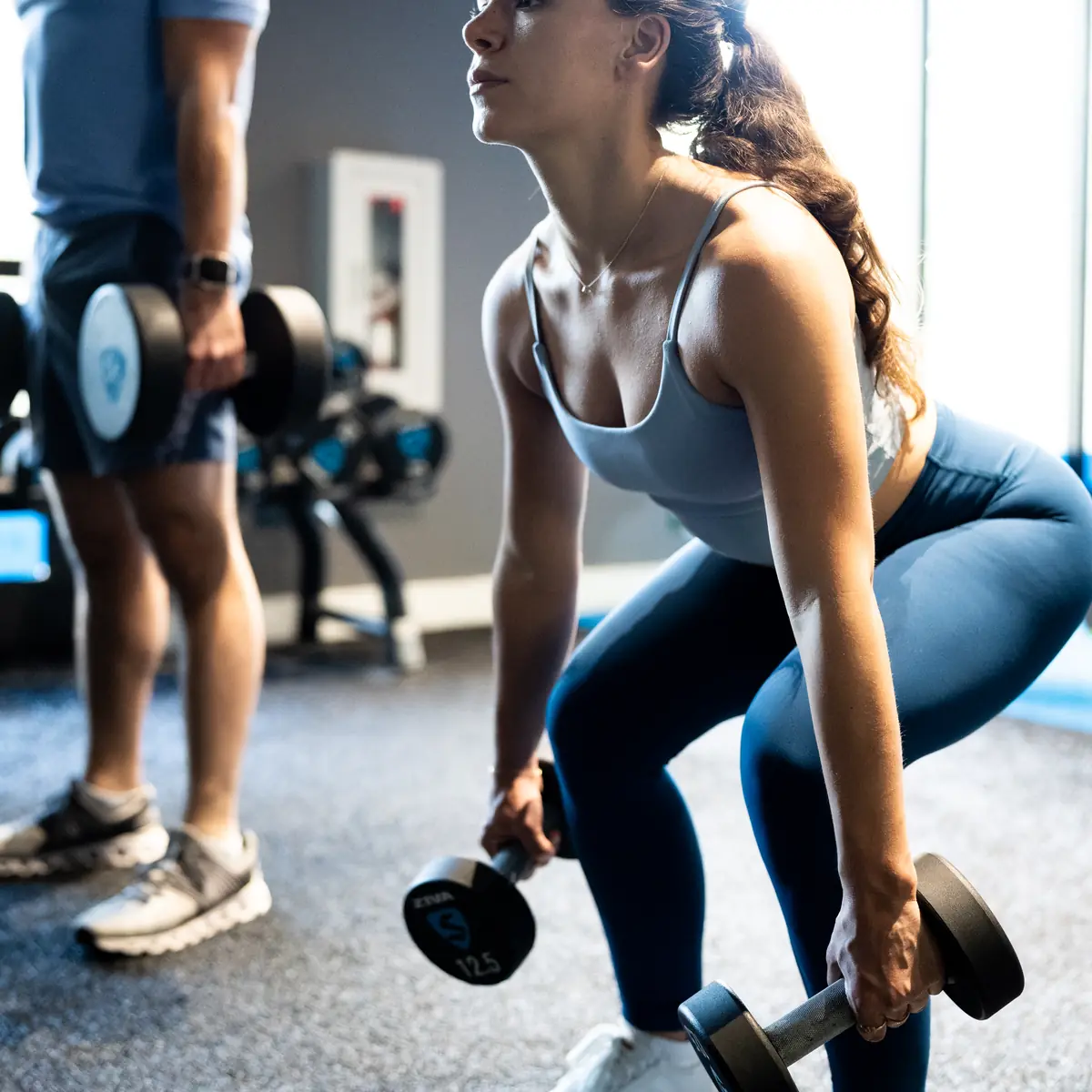
Squats, leg presses, Romanian deadlifts, glute bridges, step ups, and split squats can all be useful for the lower body. Chest presses, elevated pushups, and overhead presses train pushing strength, while rows and lat pulldowns develop the muscles involved in pulling. Core exercises such as dead bugs, Pallof presses, planks, and carries can help build stability that supports the rest of your training.
The specific version of each movement matters less than whether you can perform it with control. A beginner may start with a box squat before progressing to a goblet squat, or use a supported row before moving to a more demanding variation. The goal is to choose exercises that match your current ability and give you room to improve.
How Much Weight Should a Woman Over 40 Lift?
No universal weight applies to every woman over 40. The appropriate resistance depends on the exercise, your current strength, your experience, and how well you can control the movement.
A practical approach is to choose a weight that lets you complete about 8 to 12 repetitions, with the final few feeling challenging. If you can easily continue long after reaching the top of the range, the resistance may be too light. If your technique starts breaking down well before you reach the target, the weight may be too heavy.
Women over 40 do not need to limit themselves to very light weights simply because of age. As your strength improves, gradually increasing resistance is a normal part of training. Heavy is relative, so the goal is not to reach a particular number but to find a level that challenges you without sacrificing control.
How Many Sets and Reps Should Women Over 40 Do?
A beginner can often start with one or two sets of roughly 8 to 12 repetitions for each exercise. This gives you enough practice to learn the movement while keeping total training volume manageable. As you gain experience, some exercises may increase to three sets or use a different repetition range depending on your goals.
You also do not need to take every set to complete failure. The final repetitions should feel difficult, but your technique should still look controlled. If you have to swing the weight, shorten the movement significantly, or change your form just to finish the set, that is usually a good sign that the set has gone far enough.
Can Women Over 40 Build Muscle?
Yes, women can continue building muscle after 40. Resistance training creates a stimulus that encourages the muscles to adapt, and that process can continue through midlife and the menopause transition.
You do not need a bodybuilding routine to make progress. Regular strength training, gradually increasing the challenge, eating enough food and protein, and allowing time for recovery can all support muscle development. Progress may first appear as more repetitions, heavier resistance, better technique, or easier everyday movement before major visual changes become obvious.
It is helpful to think in terms of months rather than days. Muscle growth takes time, but small improvements in strength and performance can show that your training is working even before you notice a dramatic difference in the mirror.
Does Strength Training Help During Perimenopause and Menopause?
Strength training can remain highly valuable during perimenopause and menopause because women can continue improving strength and muscle during this stage of life. Resistance exercise can also support physical function, body composition, and bone health as part of a broader fitness routine.
That does not mean strength training will eliminate every menopause symptom. Sleep disruption, hot flashes, stress, and changes in energy can still affect how training feels from week to week. Some weeks you may feel ready to increase the weight, while other weeks maintaining your current workload may be the better choice.
The most useful approach is flexibility. You do not need a completely different workout just because you are going through menopause, but you may need to adjust the difficulty based on your sleep, energy, and recovery.
How Should Women Over 40 Progress Their Workouts?
Progressive overload means gradually making your workouts more challenging as your body adapts. That can involve adding weight, but it can also mean performing more repetitions, improving your technique, increasing your range of motion, adding a set, or moving to a harder exercise variation.
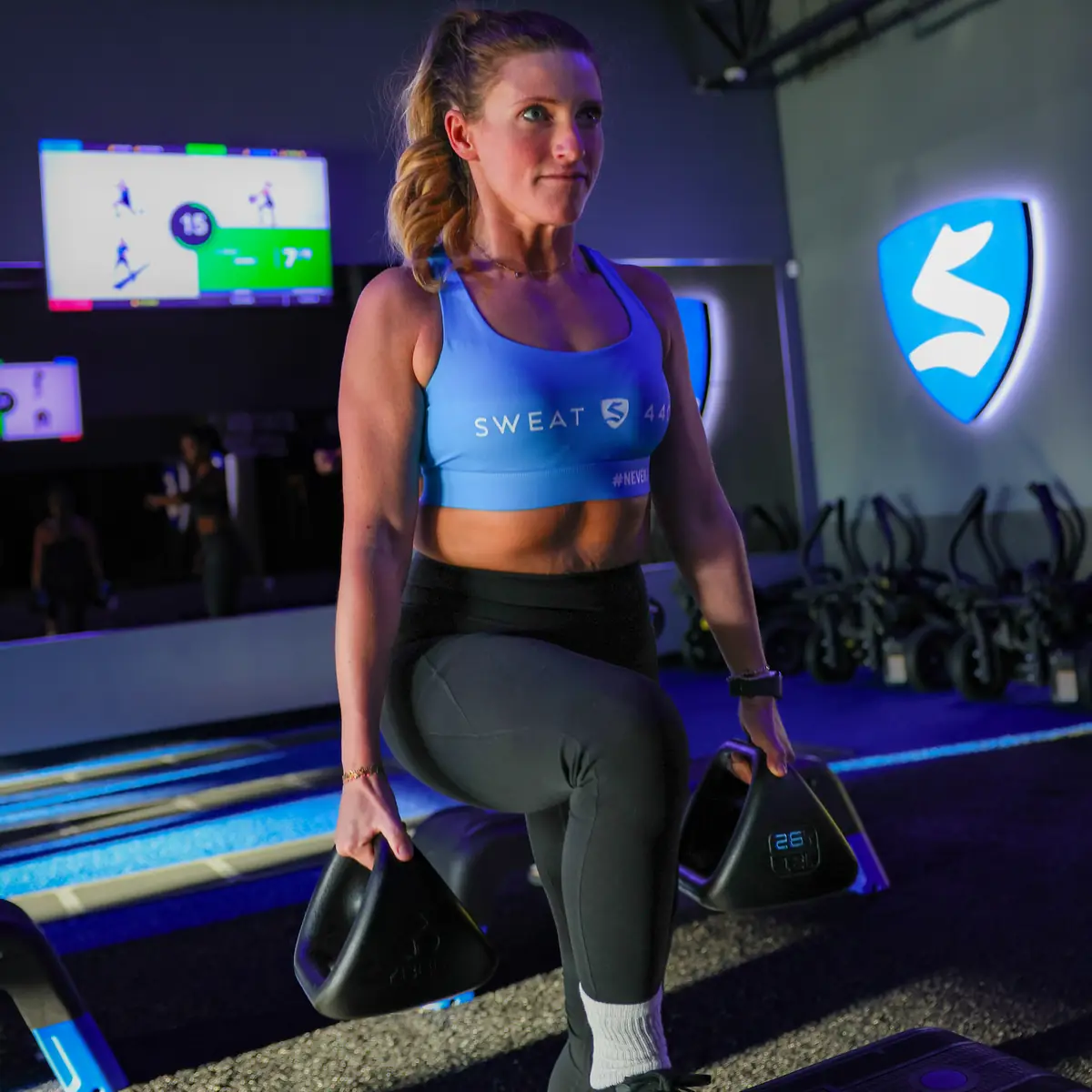
One simple method is to choose a range of 8 to 12 repetitions. You might begin with two sets of 8 repetitions and gradually work toward two sets of 12. Once 12 controlled repetitions feel manageable, increase the resistance slightly and return toward the lower end of the range before building up again.
Progress does not need to happen every workout. There will be weeks when maintaining the same resistance is the right choice, especially if your sleep, stress, or overall activity has changed. The goal is steady improvement that you can recover from, not forcing every session to be harder than the one before it.
How Much Recovery Do Women Over 40 Need?
There is no universal recovery rule for every woman over 40. For many beginners, leaving at least one full day between demanding full body strength workouts is a practical starting point, but recovery needs depend on the difficulty of your workouts, your sleep, your stress, and your overall activity level.
Recovery days do not have to mean doing nothing. Walking, easy cycling, swimming, or light mobility work can still fit between strength sessions. The goal is simply to give your muscles enough time to recover before asking them to perform another demanding workout.
Pay attention to patterns in how you feel. If your energy is generally good, soreness has settled, your warmup feels comfortable, and your performance is stable, your current schedule may be working well. If you consistently feel exhausted, unusually sore, or weaker from session to session, you may need more recovery or less training volume.
Should Women Over 40 Combine Strength Training and Cardio?
Yes. Strength training and cardio support different aspects of fitness, so most women can benefit from including both. Strength training helps develop muscle and physical capacity, while cardio supports aerobic fitness, endurance, and cardiovascular health.
If strength is your main goal, it can be useful to organize your week around your strength sessions and add walking or moderate cardio between them. You can also perform cardio and strength on the same day. When strength is the priority, doing the strength work first can help you approach those exercises while you are fresher.
Cardio also does not have to mean intense interval training. Walking, cycling, swimming, and other moderate activities can fit around your lifting without creating excessive fatigue. The goal is to create a balanced routine rather than trying to maximize every type of training at the same time.
Can Women Over 40 Strength Train at Home?
Women over 40 can absolutely strength train at home. Bodyweight exercises, resistance bands, and dumbbells can provide enough variety to train the major muscle groups without requiring a full gym setup.
A simple home program might include goblet squats, Romanian deadlifts, elevated pushups, rows, split squats, and core exercises. The main challenge is making sure the workout continues to become harder as you improve. If you perform the same easy bodyweight exercises for months without increasing the challenge, your progress will eventually slow.
You can continue progressing by adding repetitions, using heavier dumbbells or stronger bands, adding a set, increasing your range of motion, or choosing a more difficult exercise variation. A gym can make progression easier by providing more equipment, but it is not necessary to get started.
What Should Women Over 40 Avoid in Strength Training?
Women over 40 do not need a long list of exercises they are suddenly supposed to avoid. It is more useful to focus on the training habits that make workouts less effective or unnecessarily risky.
Avoid sacrificing technique just to lift more weight, increasing several training variables at the same time, and treating every workout like a maximum effort. You should also avoid training through sharp or unusual pain. Strength work should feel challenging, but pain that changes how you move is different from normal muscular effort.
Don't assume lighter weights are always safer or better. Light resistance can help when you're learning an exercise, but your muscles eventually need enough challenge to keep adapting. The goal is controlled, progressive training that you can repeat consistently.
How Does SWEAT440 Support Strength Training for Women Over 40?
SWEAT440 gives women over 40 something that's hard to create when starting alone: structure. The workouts are coach-guided, strength-based, and organized into 40-minute classes with four stations, so you do not have to design every exercise and training day yourself.
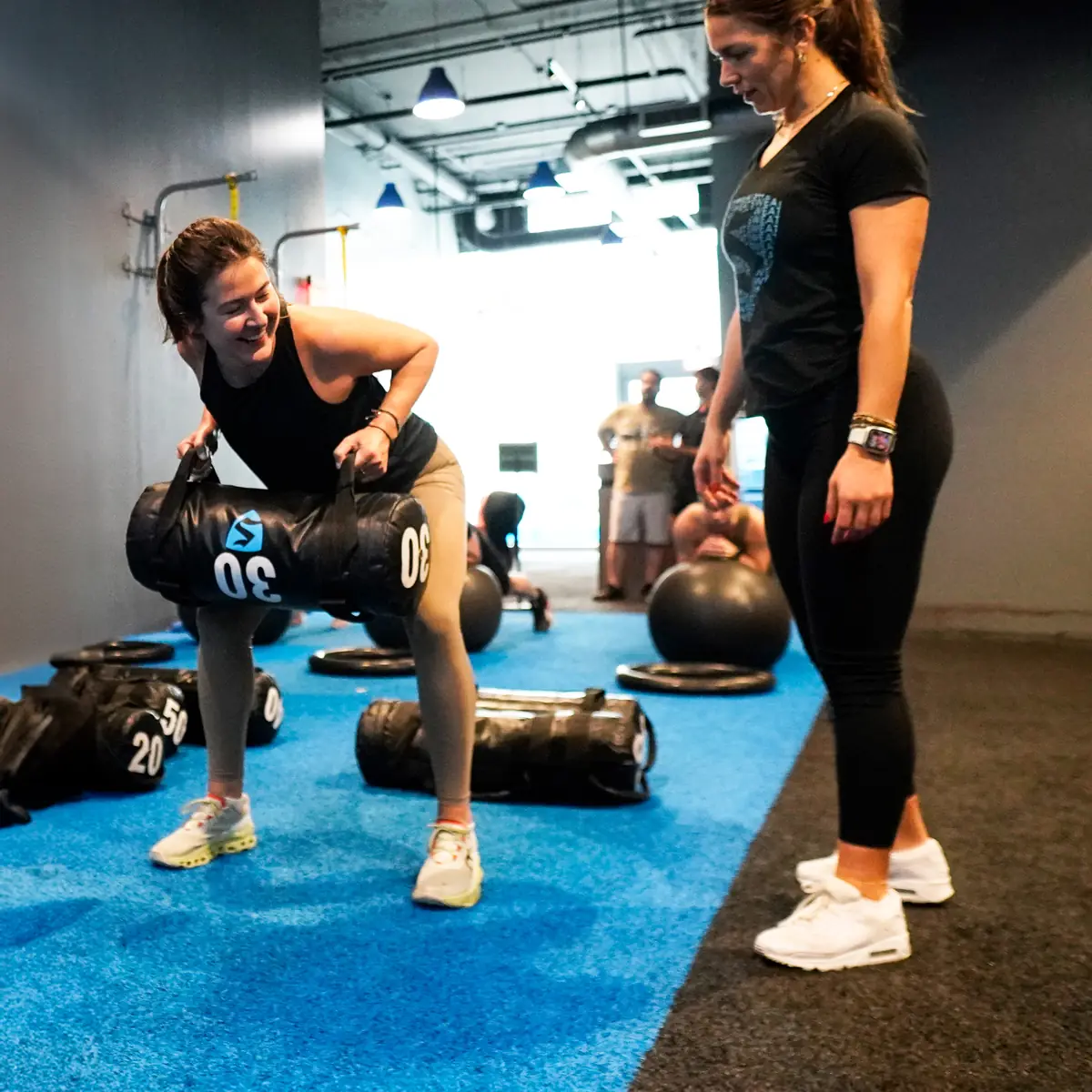
The weekly programming includes Lower Body Strength on Monday and Thursday, Upper Body Strength on Tuesday and Friday, Athletic Conditioning on Wednesday, and Hybrid Full Body training on Saturday and Sunday. Exercises can be modified for different fitness levels, which means beginners and more experienced members can train in the same class while using different resistance or variations.
Coaches can also help with form, pacing, and exercise modifications. That can be especially useful if you are learning movements such as squats, hinges, presses, and rows for the first time. Progressive overload is built into the training approach, so the goal is to continue increasing the challenge as your strength improves rather than repeating the same easy workout indefinitely.
The 40-minute format can also make consistency easier for women balancing work, family, and other responsibilities. The value is not simply that the class is short. It is that the workout is already structured, giving you a clear way to strength train without spending extra time planning everything yourself.
Frequently Asked Questions About Strength Training for Women Over 40
Is 40 too late to start strength training?
No. Women can improve strength and build muscle after 40 even if they have never lifted weights before. Starting with a manageable routine and progressing gradually can still produce meaningful improvements.
How many days a week should a woman over 40 lift weights?
Two or three strength sessions per week are a practical starting point for many women. Beginners can begin with two full body workouts and add another session when their recovery and schedule support it.
Should women over 40 lift heavy weights?
Women over 40 can use challenging resistance as long as they can control it with good technique. Heavy is relative to the individual, so there is no single weight everyone should use.
Can women over 40 still build muscle?
Yes. Consistent resistance training can support muscle and strength gains after 40, including during and after the menopause transition.
Can women over 40 strength train at home?
Yes. Dumbbells, resistance bands, and bodyweight exercises can all support effective strength training when the exercises become progressively more challenging.
Should women over 40 do cardio too?
Yes. Strength training and cardio support different parts of fitness and can be included in the same weekly routine.
Final Takeaway
Strength training for women over 40 does not require a complicated age specific program. A strong starting point is to train the major movement patterns two or three times per week, choose resistance that challenges you without sacrificing technique, and gradually increase the difficulty as your strength improves.
Some weeks progress may mean adding weight. Other weeks it may mean completing another repetition, improving your technique, or simply maintaining your current workload while recovering well. You do not need every workout to be harder than the last to keep moving forward.
The most useful program is one you can continue doing consistently. Build the foundation, give yourself time to improve, and let strength develop gradually instead of trying to rush the process.
Ready to start building strength? Find a SWEAT440 studio near you and choose a class that fits your schedule. Book your first class free and experience the difference.