Your back is involved in far more movements than you might realize. From picking something up off the floor to carrying groceries or pulling open a heavy door, your back muscles work alongside your core, shoulders, and hips to stabilize your body and produce force. Building a stronger back can make these everyday movements easier while creating a stronger foundation for your workouts.
Effective strength training for back muscles isn’t about doing endless rows or dedicating every workout to your back. A balanced approach combines pulling, hinging, carrying, and stability exercises to strengthen different areas of the back while developing the rest of your body. Understanding which muscles you’re training and how to challenge them properly can help you build strength safely and consistently.
Why Is Strength Training for Back Muscles Important?
Your back is involved in far more movements than you might realize. From picking something up off the floor to carrying groceries or pulling open a heavy door, your back muscles work alongside your core, shoulders, and hips to stabilize your body and produce force. That’s why strength training for back muscles should be part of a balanced full-body fitness routine.
A stronger back also supports better posture and upper-body stability. The muscles around your shoulder blades and spine help control the position of your shoulders and torso during exercises like rows, presses, deadlifts, and carries. Strengthening these areas can make those movements feel more controlled while helping your body handle greater demands as your fitness improves.
What many people miss is that back training isn’t just about building visible muscle. Your back plays an important role in functional strength, which is the strength you use during everyday activities. Building your pulling, carrying, and hinging strength can make everything from moving furniture to lifting a suitcase feel more manageable.
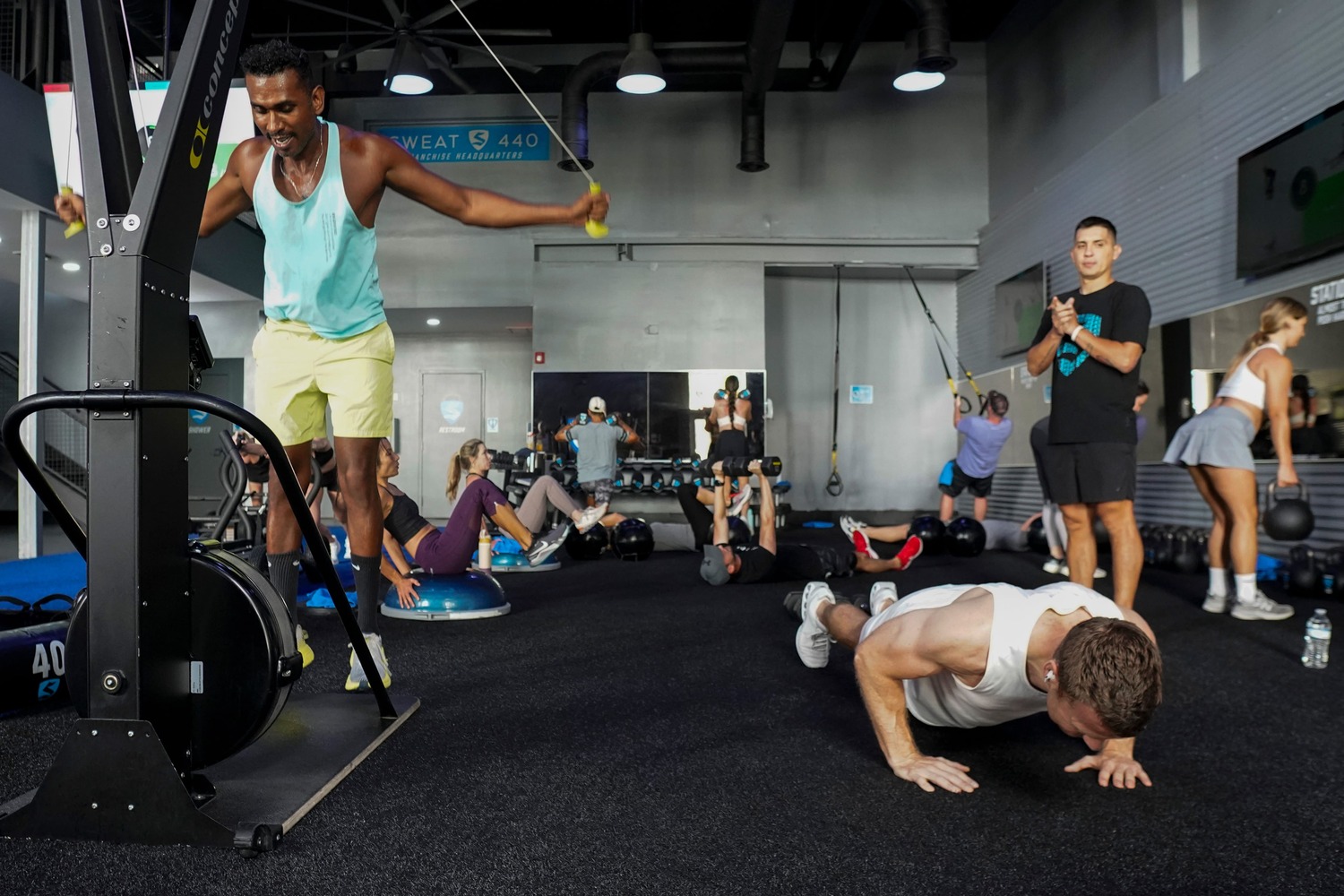
At SWEAT440, back strength is developed as part of full-body, coach-led programming rather than treated as an isolated goal. Station-based workouts incorporate pulling, carrying, hinging, and core movements that help members build balanced strength across the entire body. That approach creates strength you can use both during your workouts and in everyday life.
What Muscles Make Up Your Back?
Your back isn’t one single muscle, which is why a complete strength training program needs more than one type of pulling exercise. Several major muscle groups work together to control your shoulders, stabilize your spine, and help you lift, pull, carry, and maintain strong posture. Training these muscles as a system creates more balanced strength than focusing on one area alone.
The latissimus dorsi, commonly called the lats, are large muscles that run along the sides of your back and play a major role in pulling movements. Your trapezius and rhomboids help control and stabilize the shoulder blades, making them important during rows, carries, and other upper-body exercises. Together, these muscles contribute to upper-back strength and control.
Your erector spinae run along the spine and help support your torso during movements that require you to maintain a strong trunk position. They work during exercises such as Romanian deadlifts and other hip-hinge movements, where maintaining proper positioning is essential. Your core, shoulders, and hips also contribute to this stability, which is why effective back training should be part of a full-body strength program.
At SWEAT440, programming incorporates different pulling, hinging, carrying, and stability movements rather than relying on a single back exercise. This helps members strengthen multiple areas of the back while also developing the supporting muscles needed for balanced, functional movement.
What Are the Best Strength Training Exercises for Back Muscles?
The best strength training exercises for back muscles don’t all look the same. Your back performs several different jobs, including pulling, stabilizing your shoulder blades, supporting your torso, and maintaining control during loaded movement. A balanced routine should include exercises that challenge these functions rather than relying on one type of row or pull.
Dumbbell Rows
Dumbbell rows primarily train the lats and muscles of the upper and middle back while also involving the biceps and core. Because each arm works independently, they can help you develop balanced pulling strength while learning to control the shoulder blade through each repetition.
Keep your torso stable and pull the weight toward your hip rather than using momentum to move the dumbbell. Start with a resistance you can control throughout the full range of motion, then gradually increase the challenge as your technique improves.
Seated Rows
Seated rows strengthen the lats, rhomboids, trapezius, and other muscles involved in pulling the arms toward the body. They’re especially useful for developing horizontal pulling strength, which complements pressing exercises in a balanced strength training program.
Focus on keeping your torso controlled while pulling the handle toward your body and allowing your shoulder blades to move naturally. Avoid leaning excessively backward to create momentum, since that shifts the focus away from the muscles you’re trying to train.
Lat Pulldowns
Lat pulldowns introduce a vertical pulling pattern and primarily target the lats while also training the upper back and arms. They’re a useful option for people who aren’t ready for pull-ups or want a movement that makes resistance easier to adjust.
Pull the bar toward your upper chest with control while keeping your torso relatively stable. The goal is to use your back muscles to perform the movement rather than turning each repetition into a full-body swing.
Romanian Deadlifts
Romanian deadlifts train the posterior chain, including the hamstrings, glutes, and muscles that help stabilize the spine. While they aren’t an isolated back exercise, they teach the hip-hinge pattern and require the back and core to maintain a strong torso position throughout the movement.
Proper technique matters more than how much weight you lift. Keep the weight close to your body, hinge through the hips, and maintain a controlled trunk position as you lower and raise the resistance.
Reverse Flyes
Reverse flyes target muscles around the upper back and rear shoulders, including areas involved in controlling the shoulder blades. They complement larger pulling movements by training the upper back through a different movement pattern.
Use lighter resistance and controlled repetitions rather than trying to lift heavy. Maintaining control makes it easier to keep the focus on the upper back instead of creating momentum with the rest of your body.
Farmer’s Carries
Farmer’s carries may look simple, but they challenge the upper back, shoulders, grip, core, and lower body simultaneously. Carrying weight while maintaining an upright position teaches your body to stay stable under load, making the exercise particularly useful for functional strength.
Choose weights that challenge you without pulling your shoulders or torso out of position. Walk with controlled steps and maintain strong posture throughout the carry.
Bird Dogs
Bird dogs train core and trunk stability while teaching you to maintain control as opposite arms and legs move. They don’t load the back like rows or deadlifts, but they can help develop the stability needed to perform more demanding strength exercises with better control.
Move slowly and keep your torso as steady as possible throughout each repetition. The objective is controlled stability rather than extending your arm or leg as far as possible.
At SWEAT440, these types of pulling, hinging, carrying, and stability patterns are incorporated into full-body, coach-led programming. Rather than training the back in isolation, members develop it alongside the shoulders, core, hips, and legs, creating balanced strength that translates to everyday movement.
How Should Beginners Strength Train Their Back?
If you’re new to strength training, you don’t need to start with heavy deadlifts or complicated back exercises. Your first priority should be learning how to pull, hinge, and stabilize your torso with control. Once those movement patterns feel comfortable, you can gradually add resistance and make the exercises more challenging.
Start with exercises that are easy to control, such as seated rows, lat pulldowns, light dumbbell rows, and bird dogs. Choose a resistance that allows you to complete every repetition without swinging your body or losing your position. The final repetitions should feel challenging, but your technique should remain consistent from the beginning of the set to the end.
Hip-hinge exercises deserve extra attention because technique matters significantly. When learning a Romanian deadlift, focus on pushing your hips backward while keeping the weight close to your body and maintaining a controlled torso position. Starting light gives you time to learn the movement before increasing resistance.
The reason gradual progression works is simple. Your muscles need increasing challenges to continue getting stronger, but those challenges should match your current ability. At SWEAT440, coaches can provide guidance and exercise modifications within the station-based workout, helping beginners learn movement patterns and progress at an appropriate level while still participating in the full-body class.
How Often Should You Strength Train Your Back?
For most people, training the back at least twice per week is a practical starting point for building strength. You don’t need a dedicated back day to make progress, especially if you’re following a full-body program. Rows, pulldowns, hip hinges, carries, and other movements can be distributed across multiple workouts throughout the week.
Recovery matters because your muscles need time to adapt to the work you’re doing. How much recovery you need depends on factors like training intensity, experience, sleep, and total workout volume. Instead of training the same muscles hard every day, give your body enough time to recover while continuing to train other movement patterns.
As your back becomes stronger, progressive overload helps you continue improving. That can mean gradually increasing the resistance, completing more repetitions with good form, improving your range of motion, or performing a more challenging variation. Progress doesn’t require adding weight every workout, and technique should remain consistent as the difficulty increases.
At SWEAT440, back exercises are incorporated into balanced full-body programming rather than treated as an isolated goal. The 40-minute, coach-led format includes different movement patterns throughout the training schedule, helping members develop their back alongside the shoulders, core, hips, and legs. This approach builds practical, full-body strength while giving individual muscle groups opportunities to recover.
What Back Strength Training Mistakes Should You Avoid?
One of the most common mistakes in strength training for back muscles is using more weight than you can control. When the resistance is too heavy, it’s easy to start swinging your torso or using momentum to complete each repetition. That reduces the amount of controlled work your back muscles perform and makes it harder to maintain proper positioning throughout the exercise.
Poor technique can also show up during hip-hinge movements like Romanian deadlifts. Instead of focusing on how low you can move the weight, prioritize a controlled hip hinge and a stable torso position throughout the exercise. If maintaining that position becomes difficult, reduce the resistance or range of motion until you can perform the movement with better control.
Another mistake is relying on one exercise for your entire back. Rows are valuable, but your back performs more than one function. Combining horizontal pulls, vertical pulls, hip hinges, carries, and stability exercises develops the different muscles and movement patterns needed for balanced strength.
What most people miss is that a strong back doesn’t work independently from the rest of the body. Your core, shoulders, hips, and legs contribute to many of the same movements, which is why full-body strength training is so valuable. At SWEAT440, coach-led programming combines these movement patterns throughout the week, helping members develop balanced strength instead of repeatedly training one area in isolation.
How Does SWEAT440 Build Back Strength?
Building a stronger back doesn’t mean spending an entire workout doing rows and pulldowns. Your back works with your shoulders, core, hips, and legs during many functional movements, so training these areas together creates strength that carries over beyond the gym. A balanced program also allows you to develop different parts of the back without relying on the same exercises every session.
At SWEAT440, back strength is developed through coach-led, station-based workouts that incorporate different movement patterns. Depending on the day’s programming, members may perform rows, pulling exercises, hip hinges, carries, or core stability movements alongside exercises for the rest of the body. This variety helps create balanced strength while keeping the focus on full-body development.
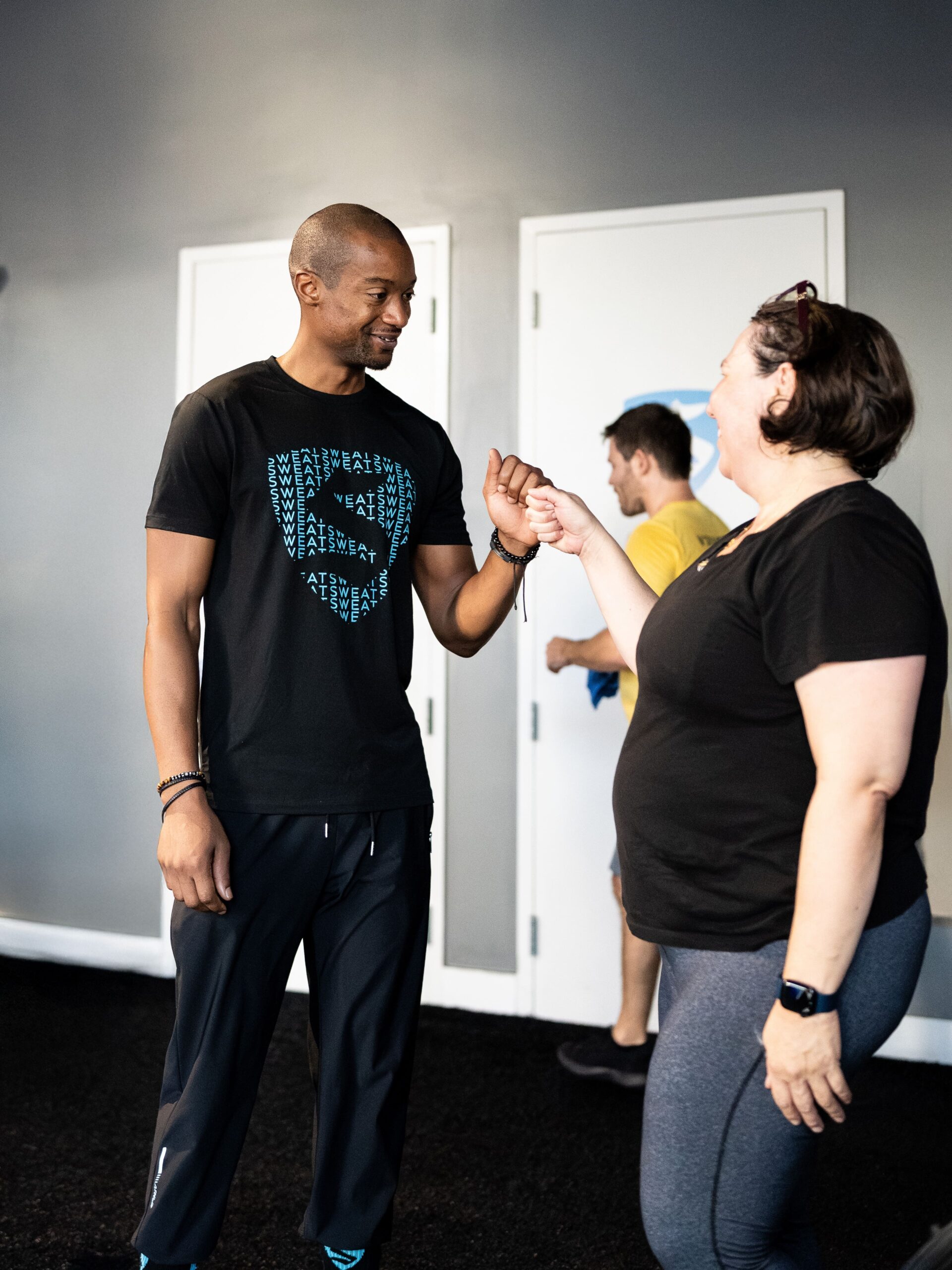
Coaching is particularly valuable with back exercises because small adjustments in technique can change how a movement feels and which muscles are doing the work. SWEAT440 coaches can provide form guidance and modifications when appropriate, helping members choose movements and resistance levels that match their current abilities. As strength and technique improve, the exercises can become progressively more challenging.
The 40-minute format also makes it possible to train efficiently without turning strength training into an hours-long commitment. Rather than deciding which back exercises to perform on your own, you follow structured programming and focus on executing each movement well. Over time, that combination of consistency, coaching, and progressive strength work helps build a stronger back as part of a stronger body.
Final Takeaway: Build Your Back as Part of Your Whole Body
Effective strength training for back muscles is about more than choosing a few pulling exercises. Your lats, trapezius, rhomboids, erector spinae, shoulders, core, and hips work together during many of the movements you perform every day. Training these areas as part of a balanced program helps you develop strength that translates beyond the gym.
Start with foundational movements such as rows, pulldowns, Romanian deadlifts, carries, and stability exercises. Focus on controlled technique before increasing resistance, and gradually make your exercises more challenging as you become stronger. Consistency and progression will take you much further than trying to lift the heaviest weight possible from the start.
At SWEAT440, back strength is developed as part of coach-led, full-body programming rather than through isolated back workouts. The 40-minute, station-based format combines different movement patterns while coaches provide guidance and modifications based on your ability. With consistent training, you can build a stronger back while improving the strength and stability of your entire body.
👉 Ready to stop guessing and start seeing real progress?
Book your first class free and experience the difference.
Biography
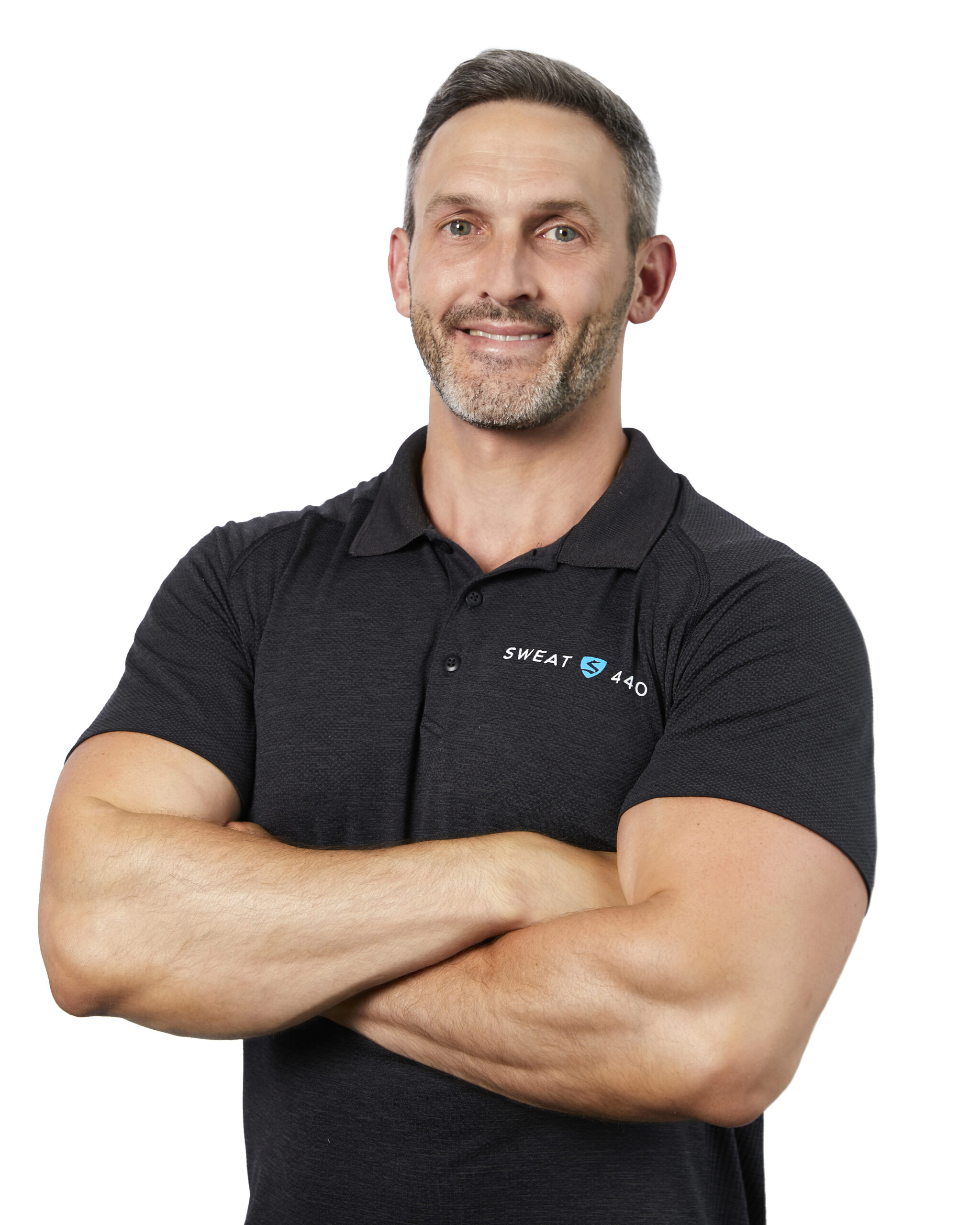 Matthew Miller has over 20 years of experience in the fitness industry as a business owner and personal trainer. He holds a BA in Exercise and Sports Science from the University of North Carolina and is CSCS certified through the NSCA. He is currently the co-founder and Chief Brand Officer of SWEAT440.