Starting strength training can feel overwhelming. With so many exercises, workout plans, and opinions online, it’s easy to wonder where to begin. The good news is that you don’t need dozens of complicated movements or hours in the gym to build strength. In fact, mastering a handful of fundamental exercises is one of the fastest ways to improve your fitness.
The best strength training exercises for beginners focus on building full-body strength, improving movement patterns, and creating a foundation you can build on over time. Whether your goal is to gain muscle, lose weight, or simply feel stronger in everyday life, these exercises will help you get started with confidence.
Why Should Beginners Start with Strength Training?
If you’re new to exercise, strength training is one of the best places to start. It helps you build muscle, improve coordination, and develop movement patterns that make everyday activities feel easier. Whether you’re carrying groceries, climbing stairs, or picking up your kids, getting stronger makes daily life more manageable.
Strength training also creates a solid foundation for almost every other fitness goal. Building lean muscle supports a healthy metabolism, improves posture, strengthens bones, and increases joint stability. These benefits don’t just help you perform better in the gym. They also contribute to better long-term health and reduce the risk of injury as you become more active.
Here’s what many beginners don’t realize. You don’t need complicated workouts or advanced techniques to see results. Consistently practicing a handful of fundamental movements with good technique is often enough to build strength, gain confidence, and make noticeable progress during your first few months of training.
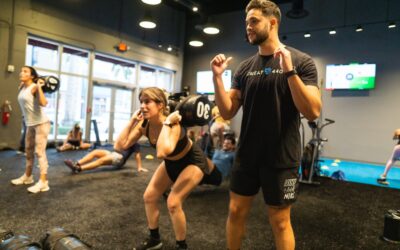
At SWEAT440, beginners are introduced to these foundational movements in coach-led, station-based classes that emphasize proper form and gradual progression. Instead of trying to figure everything out on your own, you can focus on learning the basics while building the confidence to keep improving.
What Makes a Good Strength Training Exercise for Beginners?
Not every exercise is the right choice when you’re just getting started. The best strength training exercises for beginners are the ones that teach fundamental movement patterns while helping you build strength safely and confidently. Instead of focusing on complicated lifts or advanced techniques, beginners should master the basics first.
Compound exercises are the ideal place to start because they work multiple muscle groups at the same time. Movements like squats, presses, rows, and lunges improve coordination while building strength throughout the entire body. They also mimic everyday activities, making the strength you build in the gym useful outside of it.
Another important factor is progression. A good beginner exercise can grow with you as your fitness improves. You might start with a bodyweight squat, progress to a goblet squat, and eventually perform barbell squats as your technique and confidence develop. This gradual progression allows you to continue building strength without rushing into exercises that exceed your current ability.
At SWEAT440, these foundational movements are at the core of every workout. Coaches focus on proper technique first, then help members progress safely over time. That approach allows beginners to build confidence, reduce injury risk, and develop the skills needed for long-term success.
What Are the Best Strength Training Exercises for Beginners?
Bodyweight Squat
The bodyweight squat is one of the first exercises every beginner should learn. It teaches proper squat mechanics while strengthening the quadriceps, glutes, hamstrings, and core. Because it uses your own body weight, it’s an excellent way to build confidence before adding resistance.
Learning to squat correctly also improves everyday movements like sitting down, standing up, and lifting objects from the ground. Mastering this movement pattern creates a strong foundation for future strength training.
Goblet Squat
Once you’re comfortable with bodyweight squats, the goblet squat is a natural progression. Holding a dumbbell or kettlebell close to your chest helps improve posture while adding resistance to continue building lower-body strength.
The goblet squat develops the legs, glutes, and core while reinforcing proper squat technique. It’s one of the safest and most effective ways for beginners to learn how to lift external weight.
Romanian Deadlift
The Romanian deadlift teaches one of the most important movement patterns in strength training: the hip hinge. This exercise strengthens the hamstrings, glutes, lower back, and core while helping improve posture and overall athletic performance.
Rather than lifting heavy immediately, beginners should focus on controlling the movement and maintaining a neutral spine. Good technique makes this exercise one of the best tools for developing posterior chain strength.
Glute Bridge
The glute bridge is a simple but highly effective exercise for activating the glutes and strengthening the hips. Strong glutes support better posture, improve lower-body power, and reduce unnecessary stress on the knees and lower back.
Many beginners spend long hours sitting throughout the day, which can contribute to weak or inactive glutes. Incorporating glute bridges into a workout helps restore strength and improve movement quality.
Reverse Lunge
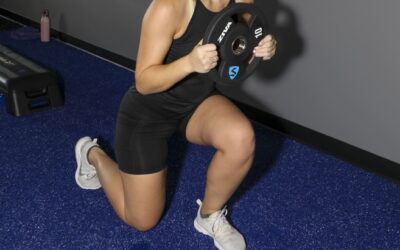
Reverse lunges develop lower-body strength while improving balance and coordination. Because each leg works independently, this exercise helps correct muscle imbalances that often develop over time.
Stepping backward places less stress on the knees than some forward lunge variations, making reverse lunges a comfortable option for many beginners learning single-leg movements.
Step-Up
Step-ups are one of the most functional strength training exercises you can perform. They strengthen the quadriceps, glutes, hamstrings, and calves while closely mimicking activities like climbing stairs or hiking.
Beginners can easily adjust the height of the platform to match their ability and gradually increase the challenge as they become stronger.
Push-Up
Push-ups are a classic upper-body exercise that strengthens the chest, shoulders, triceps, and core. They also teach full-body stability because your core must remain engaged throughout the movement.
If a standard push-up feels too challenging, beginners can start with incline push-ups using a bench or elevated surface before progressing to the floor.
Dumbbell Bench Press
The dumbbell bench press builds upper-body strength while improving shoulder stability. Using dumbbells allows each arm to move independently, helping develop balanced strength and coordination.
Beginners should prioritize smooth, controlled repetitions over heavy weights. Building proper technique early creates a safer path for long-term progress.
Seated Row
The seated row strengthens the upper back, lats, and biceps while helping improve posture. This exercise balances pressing movements by strengthening the muscles responsible for pulling your shoulders back.
For beginners who spend much of the day sitting at a desk, stronger back muscles can help improve posture and reduce muscle imbalances.
Dumbbell Shoulder Press
The dumbbell shoulder press develops the shoulders, triceps, and upper chest while improving overhead strength. Because each arm works independently, beginners also develop better shoulder stability and coordination.
Maintaining a controlled range of motion and avoiding excessive weight helps reinforce proper technique and reduce unnecessary strain on the shoulders.
Farmer’s Carry
The farmer’s carry is one of the most practical strength training exercises because it mimics carrying groceries, luggage, or other heavy objects. It strengthens the grip, shoulders, core, and lower body while improving posture and overall stability.
Although it looks simple, the farmer’s carry challenges nearly every major muscle group and reinforces full-body control during movement.
Plank
The plank is one of the best exercises for building core stability. Instead of producing movement, the core works to resist movement, helping stabilize the spine and improve posture during other strength training exercises.
A strong core supports better technique during squats, deadlifts, presses, and many everyday activities, making the plank an essential exercise for beginners.
How Many Strength Training Exercises Should Beginners Do?
When you’re starting strength training, doing more isn’t necessarily better. Many beginners think they need to perform ten or fifteen different exercises to get a good workout, but that often leads to fatigue before they’ve had the chance to practice each movement properly. A smaller selection of well-chosen exercises usually delivers better results.
A full-body workout built around five to seven exercises is enough to strengthen every major muscle group. For example, you might include a squat, a hip hinge like a Romanian deadlift, an upper-body push, an upper-body pull, and a core exercise. This combination provides a balanced workout while giving you enough time to focus on proper form and controlled movement.
The reason this approach works is that compound exercises train multiple muscle groups at once. Instead of spending time on several isolation exercises, you can build strength more efficiently with movements that closely resemble the way your body moves in everyday life. As your technique improves, you can gradually increase the weight, repetitions, or difficulty of each exercise without adding unnecessary complexity.
At SWEAT440, every 40-minute class is designed around this principle. Rather than overwhelming beginners with countless exercises, the coach-led workouts combine functional movement patterns into an efficient full-body session that builds strength, improves fitness, and keeps members progressing from one workout to the next.
What Are the Most Common Beginner Strength Training Mistakes?
Starting a strength training program is exciting, but it’s easy to make mistakes that slow your progress. The good news is that most of these mistakes are completely avoidable. Focusing on good habits from the beginning will help you build strength safely and stay motivated over the long term.
One of the biggest mistakes is lifting more weight than you can control. Proper technique should always come before heavier weights. Performing an exercise with good form allows you to target the right muscles, reduce unnecessary stress on your joints, and create a stronger foundation for future progress.
Another common mistake is constantly changing your workouts. While variety has its place, beginners benefit from repeating the same foundational exercises for several weeks. Practicing movements like squats, rows, presses, and hip hinges helps improve technique while making it easier to measure your progress over time.
Recovery is another area that’s often overlooked. Your muscles become stronger between workouts, not during them. Getting enough sleep, eating enough protein, and allowing your body time to recover are just as important as the workouts themselves.
Finally, avoid comparing your progress to others. Everyone starts at a different fitness level, and strength develops at a different pace for every person. Focus on becoming stronger than you were last week rather than trying to keep up with someone who has been training for years.
At SWEAT440, coach-led classes help beginners avoid these common mistakes by emphasizing proper form, progressive programming, and consistent training. Instead of wondering whether you’re doing the right exercises, you can focus on building strength with confidence.
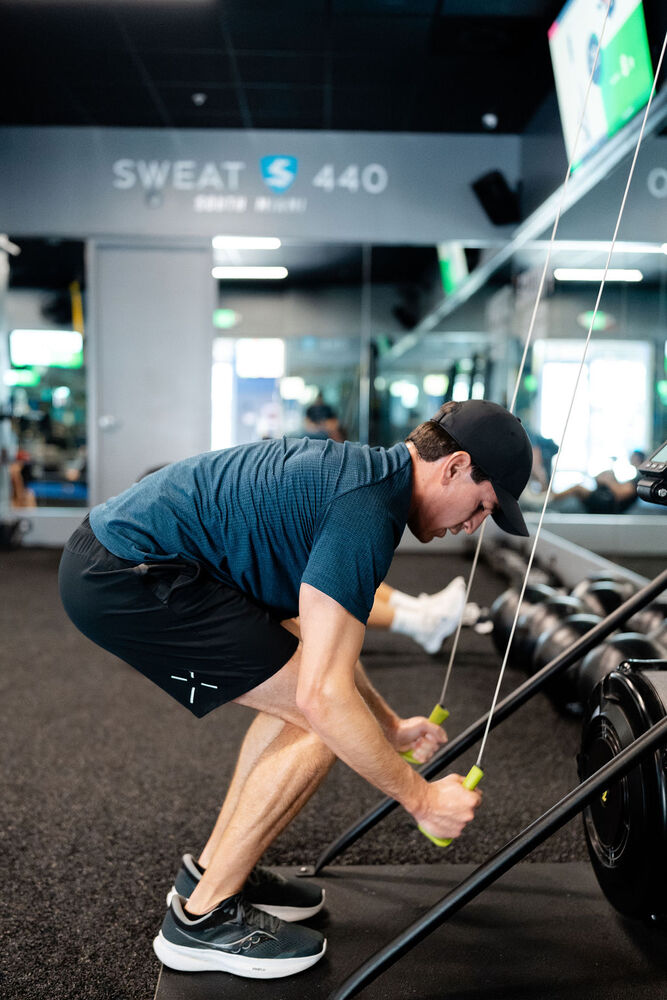
Why Does Coach-Led Strength Training Help Beginners?
Starting a strength training program can feel intimidating, especially if you’ve never lifted weights before. Many beginners worry about using the wrong technique, choosing the wrong exercises, or not knowing how much weight to lift. Those uncertainties can make it difficult to stay confident and consistent.
Working with a coach removes much of that guesswork. Instead of figuring everything out on your own, you receive guidance on proper form, exercise selection, and progression. Learning the right movement patterns from the beginning helps you build strength safely while reducing the risk of developing poor habits that become harder to correct later.
Coaching also provides accountability. Knowing that someone is there to guide your workout and help you progress makes it easier to stay committed, even when motivation is low. Over time, that consistency leads to greater confidence, better technique, and measurable improvements in strength.
At SWEAT440, every class is coach-led and designed to help members succeed regardless of their experience level. Coaches provide instruction, encourage proper technique, and offer modifications when needed, allowing beginners to focus on learning, improving, and enjoying the process. Combined with 40-minute workouts and new classes starting every 10 minutes, the program removes many of the barriers that often prevent people from sticking with strength training.
Final Takeaway: Master the Basics Before Chasing Advanced Exercises
You don’t need an advanced workout plan to become stronger. The best strength training exercises for beginners are often the simplest ones because they teach the movement patterns your body relies on every day. By mastering exercises like squats, Romanian deadlifts, rows, presses, and lunges, you’ll build a strong foundation that supports every future fitness goal.
Remember that progress comes from consistency, not complexity. Focus on learning proper technique, gradually increasing the challenge, and sticking with a routine you enjoy. Over time, those small improvements add up to greater strength, better mobility, and more confidence both inside and outside the gym.
If you’re looking for expert guidance, SWEAT440’s coach-led, station-based workouts provide a supportive environment where beginners can learn proper form, build strength safely, and make steady progress. With 40-minute classes and new sessions starting every 10 minutes, it’s easier than ever to make strength training part of your routine.
👉 Ready to stop guessing and start seeing real progress?
Book your first class free and experience the difference.
Biography
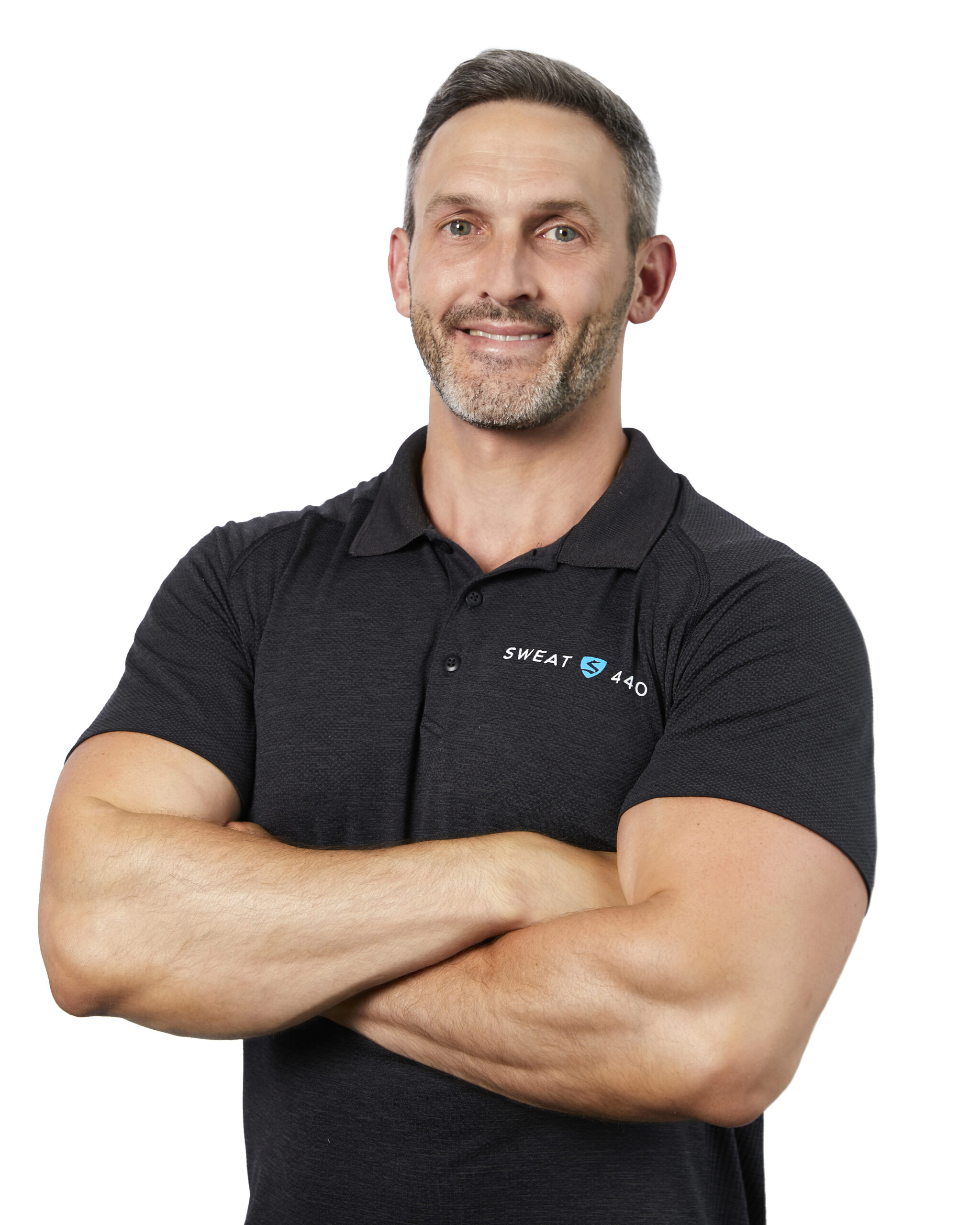 Matthew Miller has over 20 years of experience in the fitness industry as a business owner and personal trainer. He holds a BA in Exercise and Sports Science from the University of North Carolina and is CSCS certified through the NSCA. He is currently the co-founder and Chief Brand Officer of SWEAT440.