If you want to build a stronger chest, you do not need an endless list of exercises or a complicated training plan.
A good chest workout comes down to a few basics: choose exercises that make sense for you, learn how to perform them well, do enough productive work throughout the week, and gradually increase the challenge as you get stronger.
That could mean training with a barbell, dumbbells, machines, push ups, or a mix of all four. There is no single exercise everyone has to do.
What matters is whether your routine fits your experience, gives you a way to progress, and is manageable enough to repeat consistently.
This guide covers the best chest exercises, proper bench press technique, sets and reps, training frequency, progressive overload, common mistakes, and sample routines for beginners and intermediate lifters.
What Muscles Make Up the Chest?
The main muscle across the front of your chest is the pectoralis major.
It has two main portions:
- Clavicular head: The upper portion of the chest
- Sternocostal head: The larger middle and lower portion
These are not completely separate muscles. They are different regions of the same pectoralis major.
That is why changing the angle of an exercise can place more emphasis on one area without completely isolating it.
Underneath the pectoralis major is the smaller pectoralis minor. It contributes more to movement and stability around the shoulder blade than to the visible size of your chest.
Your chest also rarely works alone.
Exercises such as bench presses, dumbbell presses, and push ups involve your front shoulders and triceps as well.
Because of that, you do not need a separate exercise for every small area of the chest. A few well chosen movements can cover a lot of ground.
What Are the Best Chest Exercises?
There is no single best chest exercise for everyone.
The most useful movements are the ones you can perform with good technique, progressively make harder, and repeat consistently without unnecessary discomfort.
A strong chest workout will usually start with one main pressing movement.
Good options include:
- Barbell bench press
- Dumbbell chest press
- Machine chest press
- Push ups
You do not need all of them in the same session.
Choose one main press that fits your experience and equipment, then build the rest of the workout around it.
An incline press can be useful when you want more emphasis on the upper portion of the chest. A moderate incline is usually enough. As the bench becomes steeper, your front shoulders start taking on more of the work.
Dumbbells are another useful option because each arm controls its own weight and you have more freedom in how your hands and arms move.
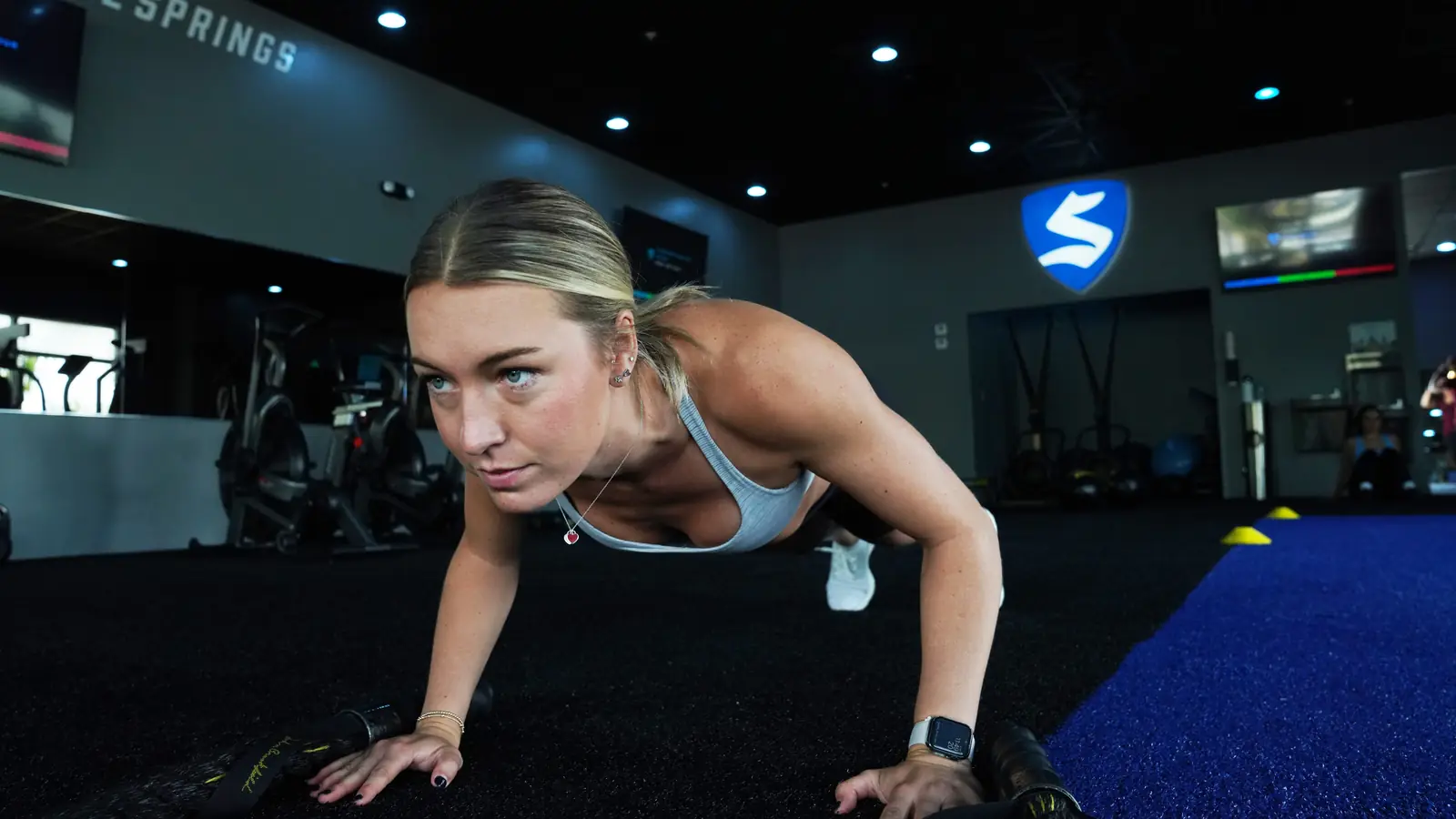
Push ups can also be a real chest exercise, not just a warm-up. They are especially useful for beginners, home workouts, and anyone who wants a bodyweight option.
Fly variations can add extra chest work after your pressing exercises.
Options include:
- Dumbbell flyes
- Cable flyes
- Machine flyes
You do not need a long list.
For most people, one main press, an optional incline movement, and one additional exercise such as a fly or push up can make a productive workout.
How Do You Train the Upper Chest?
The simplest way to put more emphasis on your upper chest is to include an incline pressing movement.
The upper chest refers to the clavicular portion of the pectoralis major.
Incline pressing does not completely isolate that area, but changing the bench angle can shift more of the work toward it.
Useful options include:
- Incline barbell bench press
- Incline dumbbell press
- Incline machine chest press
A moderate incline is usually enough.
You do not need to set the bench as high as possible. Once the angle becomes too steep, the movement starts turning more into a shoulder press.
Flat pressing still trains the upper portion of the chest too.
That means you do not need three different incline exercises in the same workout.
A simple approach is to use one general chest press and one incline press, then focus on improving both over time.
What Are the Best Chest Exercises for Beginners?
Beginners do not need an advanced chest routine.
A few simple exercises that are easy to learn and progress are more than enough to get started.
Good beginner options include:
- Machine chest press
- Dumbbell chest press
- Barbell bench press
- Incline chest press
- Incline, knee, or standard push ups
A machine chest press can be a useful starting point because the movement is stable and the resistance is easy to adjust.
Dumbbells and barbells can work well too, especially once you feel comfortable controlling the weight.
Push ups are another good beginner exercise because you can adjust them to your current strength.
If a standard push up is too difficult, start with your hands elevated or use a modified version. As you get stronger, gradually move toward harder variations.
youtube.com/shorts/4Bc1tPaYkOo
The goal early on is not to use the most advanced exercises.
Learn a few basic movements, perform them consistently, and give yourself room to improve.
How Do You Bench Press With Proper Form?
A good bench press starts with your setup.
Plant your feet firmly on the floor, keep your upper back supported by the bench, and grip the bar evenly.
Your wrists should stay relatively straight, with the bar positioned over your forearms rather than rolling backward into your hands.
Before you lower the bar, keep your shoulder blades stable against the bench. This gives you a stronger base to press from.
From there:
- Lower the bar slowly and under control
- Keep your elbows in a comfortable position instead of flaring them aggressively
- Keep your wrists stacked over your elbows
- Press the bar up and slightly back while keeping your position stable
The bar does not have to move perfectly straight up and down. A slight curve in the path is normal.
Do not add weight faster than your technique can handle.
If the bar starts bouncing off your chest, your wrists collapse backward, or your position changes significantly just to finish the rep, the resistance may be too heavy.
You also do not have to copy someone else's exact range of motion.
Use a comfortable range that you can control while keeping your shoulders in a strong position.
Are Dumbbells or Barbells Better for Chest?
Both can work.
Barbells and dumbbells each have advantages, and neither one is automatically better for every lifter.
Barbells usually allow you to lift more total weight because both hands are controlling one bar. That can make the barbell bench press especially useful if increasing pressing strength is a major goal.
Dumbbells make each arm control its own weight and allow a little more freedom in your arm and hand position.
For some people, that simply feels better.
A simple way to compare them is:
- Barbells: Useful for heavier, measurable strength progression
- Dumbbells: Useful for independent arm movement and exercise variety
You also do not need to choose one forever.
For example, you could use a barbell bench press as your main movement and follow it with an incline dumbbell press.
If improving your barbell bench press is the goal, practice the barbell bench press regularly. If you are training for general chest development, either option can work.
Are Push Ups Enough to Build Your Chest?
Yes, push ups can build your chest.
The important question is whether they are still challenging enough for your current strength level.
Push ups train the chest along with the triceps and front shoulders, which makes them useful for beginners, home workouts, and bodyweight training.
As you get stronger, however, the exercise needs to progress too.
You can make push ups harder by:
- Adding repetitions
- Slowing the movement down
- Increasing your range of motion
- Elevating your feet
- Adding resistance
- Moving to a harder variation
Beginners may be able to use push ups as a main chest exercise for quite a while.
If a standard push up is too difficult, start with an easier variation. If standard push ups become easy, make them more challenging.
Eventually, dumbbells, barbells, or machines can make progression easier because you can increase resistance in smaller, more measurable steps.
That does not mean push ups stop being useful. They can still stay in your program.
How Many Chest Exercises Should You Do?
For most people, 2 to 4 chest exercises per workout is plenty.
A simple session might include:
- One main press
- One incline press
- One accessory movement such as a chest fly or push up
A fourth exercise can make sense if it adds something useful, but it is not automatically necessary.
What matters more is the amount of productive training you complete across the week.
If you train your chest twice per week, you can spread your exercises and sets across both sessions instead of trying to fit everything into one day.
Your exercises should also have a reason for being there.
A flat press can provide general chest work. An incline press can add more upper-chest emphasis. A fly or push up can give you another movement pattern.
Several versions of nearly the same press may only add more fatigue.
Beginners can usually start with two or three exercises and make plenty of progress.
How Many Sets and Reps Should You Do for Chest?
There is no perfect formula that works for everyone.
For many beginners and intermediate lifters, around 2 to 3 working sets per exercise is a useful place to start.
For example:
- Main chest press: 2 to 3 sets
- Secondary press: 2 to 3 sets
- Fly, push up, or accessory movement: 2 to 3 sets
A moderate range such as 6 to 12 reps works well for many chest exercises, but every movement does not need to use the same number.
If strength is your main goal, heavier resistance and lower rep ranges may make sense for an exercise such as the bench press.
If muscle growth is the priority, pay more attention to getting enough challenging training across the week and gradually increasing it over time.
Different exercises can use different ranges.
A heavy press might use fewer repetitions, while a fly or push up may fit better with moderate or higher reps.
You also do not need to follow 3 sets of 10 for everything.
Use a range that fits the movement and your goal.
How Often Should You Train Your Chest?
Training your chest around twice per week is a practical starting point for many people.
That can make it easier to spread your weekly work across multiple sessions instead of squeezing everything into one workout.
For example:
- Monday: Chest or push-focused workout
- Thursday: Chest or upper-body workout
Those days are just an example.
What matters is leaving enough recovery between harder sessions so you can return ready to perform well.
Beginners may also train their chest during two or three full-body workouts each week.
In that case, exercises such as presses and push ups already provide chest work without needing a separate chest day.
Training more often is not automatically better.
Your ideal frequency depends on how much work you are doing, how hard you are training, your experience level, and how well you recover.
Remember that pressing exercises also train the shoulders and triceps, so the rest of your weekly program matters too.
How Do You Progressively Overload a Chest Workout?
Progressive overload means gradually increasing the challenge as your body adapts.
That can mean adding weight, but it is not the only option.
You can progress by:
- Adding repetitions
- Increasing resistance
- Adding a working set when it makes sense
- Improving your range of motion
- Improving your control
- Moving to a harder exercise variation
One simple approach is to use a repetition range.
If your target for a dumbbell chest press is 8 to 12 reps, start with a weight you can control near the lower end of that range.
Over time, add repetitions.
Once you can consistently reach the top of the range with good technique, increase the resistance slightly and start building again.
The same idea works with push ups.
When one variation becomes too easy, progress to a harder version instead of repeating the same easy sets forever.
Progress should not come at the expense of technique.
Adding weight while cutting your range of motion or losing control is not necessarily better training.
You also do not need to improve every exercise every week.
Look at your progress across several weeks or months instead of expecting a personal best in every workout.
What Are the Most Common Chest Workout Mistakes?
Most chest workout mistakes come from doing more than you need or progressing faster than your technique can handle.
Using More Weight Than You Can Control
Adding resistance can help you get stronger, but only when you can still control the movement.
If your range of motion becomes much shorter, the bar starts bouncing off your chest, or your technique falls apart, the load may be too heavy.
Doing Too Many Similar Exercises
You do not need several versions of nearly the same press.
One main press, one incline movement, and an optional accessory exercise can already create a productive chest session.
Cutting Your Range of Motion Short
A heavier number on the bar is not automatically progress if you have to cut every repetition short to lift it.
Use a range you can control and keep it relatively consistent as you progress.
Training Every Set to Failure
Sets should be challenging, but every set does not need to end when another repetition is completely impossible.
Constantly pushing everything to failure can add fatigue without automatically improving results.
Ignoring Progressive Overload
If you repeat the same workout forever, your body eventually has less reason to adapt.
Track what you are doing and gradually increase the challenge.
Adding Too Much Volume
If progress slows, another exercise is not always the answer.
Start with enough work to make progress, then add more when there is a clear reason.
Neglecting Recovery
Your chest does not train in isolation.
Pressing also uses the shoulders and triceps, so keep the rest of your upper-body training in mind.
Changing Exercises Constantly
Give your main movements enough time to improve.
If you change exercises every week, it becomes harder to tell whether you are actually getting stronger or improving your technique.
A productive workout is not the one that leaves you the most exhausted.
It is the one you can recover from, repeat, and gradually improve.
What Does a Sample Chest Workout Look Like?
A useful chest routine does not need to be complicated.
The main difference between beginner and intermediate training is usually how much work you can handle and how much variety you actually need.
Beginner Chest Workout
A simple beginner routine could include:
- Machine or dumbbell chest press: 2 to 3 sets of 8 to 12 reps
- Incline chest press: 2 to 3 sets of 8 to 12 reps
- Push ups: 2 challenging sets
That gives you a main press, some upper-chest work, and a bodyweight exercise without turning the session into a marathon.
Focus on learning the movements first.
Once your technique becomes more consistent, gradually improve your repetitions, resistance, or exercise difficulty.
Intermediate Chest Workout
An intermediate lifter might use:
- Barbell bench press: 3 sets of 5 to 8 reps
- Incline dumbbell press: 3 sets of 8 to 12 reps
- Cable or machine chest fly: 2 to 3 sets of 10 to 15 reps
- Optional push ups: 1 to 2 challenging sets
The bench press gives you a clear strength-focused movement, while the incline press and fly add more chest work through different patterns.
These routines are examples, not rules.
If you prefer a machine press instead of a barbell, use it. If you train your chest twice per week, you can divide the exercises and sets between both sessions.
A good chest workout is one that matches your experience, supports your goals, and is manageable enough to perform consistently.
Final Takeaway
Building your chest does not require the longest workout or the biggest exercise list.
Start with a few movements you can perform well.
Use a main press, add an incline variation when you want more upper-chest emphasis, and include exercises such as push ups or flyes when they serve a purpose.
Then focus on the things that actually move your training forward: good technique, enough weekly work, gradual progression, and consistent recovery.
You do not need the perfect routine.
You need one you can keep showing up for and improving.
If you want coach-led strength training with clear structure, exercise guidance, and modifications based on your fitness level, find a SWEAT440 location near you and see how a 40-minute workout can fit into your routine.
Book your first class free and experience the difference.
Frequently Asked Questions About Chest Workouts
What is the best chest workout for building strength and muscle?
A good chest workout usually includes one main pressing exercise, an incline movement, and an optional accessory exercise such as a fly or push up. The exact routine should depend on your experience and whether strength, muscle growth, or both are the priority.
How many chest exercises should you do per workout?
For most people, 2 to 4 chest exercises are enough. Choose movements that serve different purposes instead of doing several variations of the same press.
How many sets and reps should you do for chest?
A practical starting point is 2 to 3 working sets per exercise. Moderate ranges such as 6 to 12 reps work well for many chest exercises, although different ranges can also work depending on your goal.
How often should you train your chest?
Around twice per week is a practical starting point for many people. Beginners may also train their chest as part of two or three full-body sessions each week.
Are push ups enough to build your chest?
Yes. Push ups can build your chest when they are challenging enough. As you get stronger, make the movement harder or add weighted chest exercises so you can continue progressing.
Are dumbbells or barbells better for chest?
Both can work well. Barbells make heavier strength progression straightforward, while dumbbells allow each arm to move independently. You can also use both in the same program.
How do you target the upper chest?
Include an incline pressing exercise. A moderate incline can place more emphasis on the upper portion of the pectoralis major without shifting too much of the work toward the shoulders.
Do you need to train your chest to failure?
No. Your sets should be challenging, but every set does not need to end when another repetition is impossible. Consistent progression and manageable recovery matter more than exhausting yourself every workout.