Strong legs provide a foundation for how you move both inside and outside the gym. From climbing stairs and carrying objects to squatting and lunging during a workout, your lower body is involved in many of the movements you perform every day.
Effective strength training for legs is not about finding one perfect exercise or making every workout as difficult as possible. A balanced approach trains the major muscles of your lower body through different movement patterns while emphasizing good technique, appropriate resistance, recovery, and consistent progression.
Why Is Strength Training for Legs Important?
Strength training for legs helps build the lower body strength you use both inside and outside the gym. Your legs contribute to everyday movements such as standing up, climbing stairs, carrying objects, and moving with control. Training those muscles gives your body a stronger foundation for the movements you perform regularly.
The benefits extend beyond simply becoming stronger. Resistance training can improve muscular fitness and physical function, including areas such as balance and stair climbing. It also challenges muscles, bones, and connective tissue, making lower body strength an important part of a well rounded training routine.
That matters because your lower body includes several major muscle groups that need to work together. Your quadriceps, hamstrings, glutes, and calves all contribute to different movements, which is why effective strength training for legs should involve more than repeating one exercise.
At SWEAT440, lower body exercises are incorporated into structured 40 minute strength training workouts alongside movements for the rest of the body. The goal is not simply to make your legs tired. It is to train with purpose, use appropriate resistance, and build strength that can support how you move both during workouts and in everyday life.
What Muscles Should You Train for Stronger Legs?
Building stronger legs requires training more than one muscle group. Your quadriceps, hamstrings, glutes, and calves each contribute to lower body movement, and they often work together when you squat, lunge, hinge, step, walk, or climb stairs. A balanced strength training routine should give each of these areas an opportunity to work.
Your quadriceps are located at the front of your thighs and help extend your knees. They are heavily involved in exercises such as squats, lunges, and step ups. Your hamstrings run along the back of your thighs and contribute to bending the knee and extending the hip, making them particularly important during movements such as Romanian deadlifts.
Your glutes are another major part of lower body strength. They contribute to hip movement and generate force during many common leg exercises, including squats, lunges, and glute bridges. Your calves contribute to movement at the ankle and help you push through the ground during everyday activities and exercise.
What most people miss is that these muscles are designed to work together. Instead of choosing one exercise and expecting it to strengthen every part of your legs equally, a more complete approach combines different exercises and movement patterns. That gives you a stronger foundation for both everyday movement and your strength training workouts.
What Are the Best Strength Training Exercises for Legs?
The best strength training exercises for legs challenge your lower body through several different movement patterns. Instead of relying on one exercise, combining squats, hinges, lunges, step ups, bridges, and calf exercises can help you train the quadriceps, hamstrings, glutes, and calves more completely.
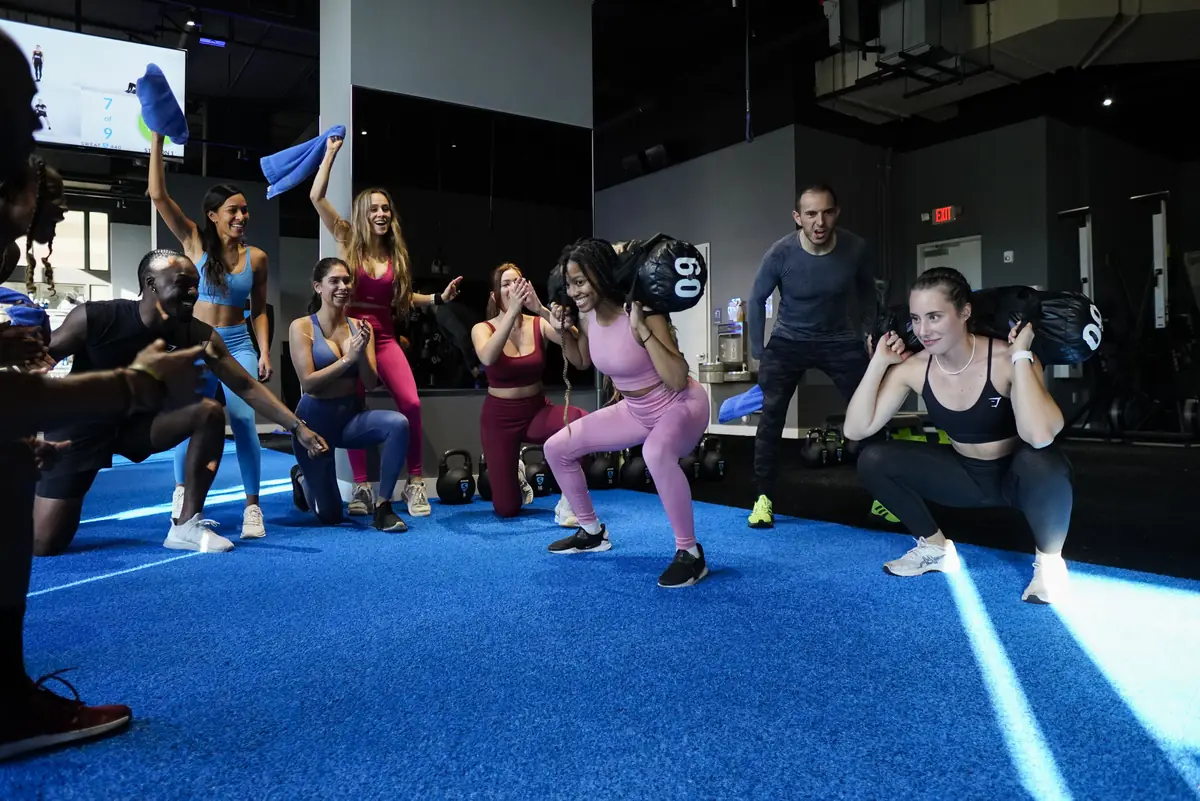
Squats are one of the most recognizable lower body strength exercises. They primarily challenge the quadriceps and glutes while teaching you to control your hips, knees, and ankles as you lower and stand back up. Beginners can start with a comfortable range of motion and manageable resistance before progressing.
Romanian deadlifts introduce a different movement pattern by emphasizing the hip hinge. They place more emphasis on the hamstrings and glutes, making them a useful complement to squat focused exercises. Maintaining control throughout the movement is more important than simply choosing the heaviest weight possible.
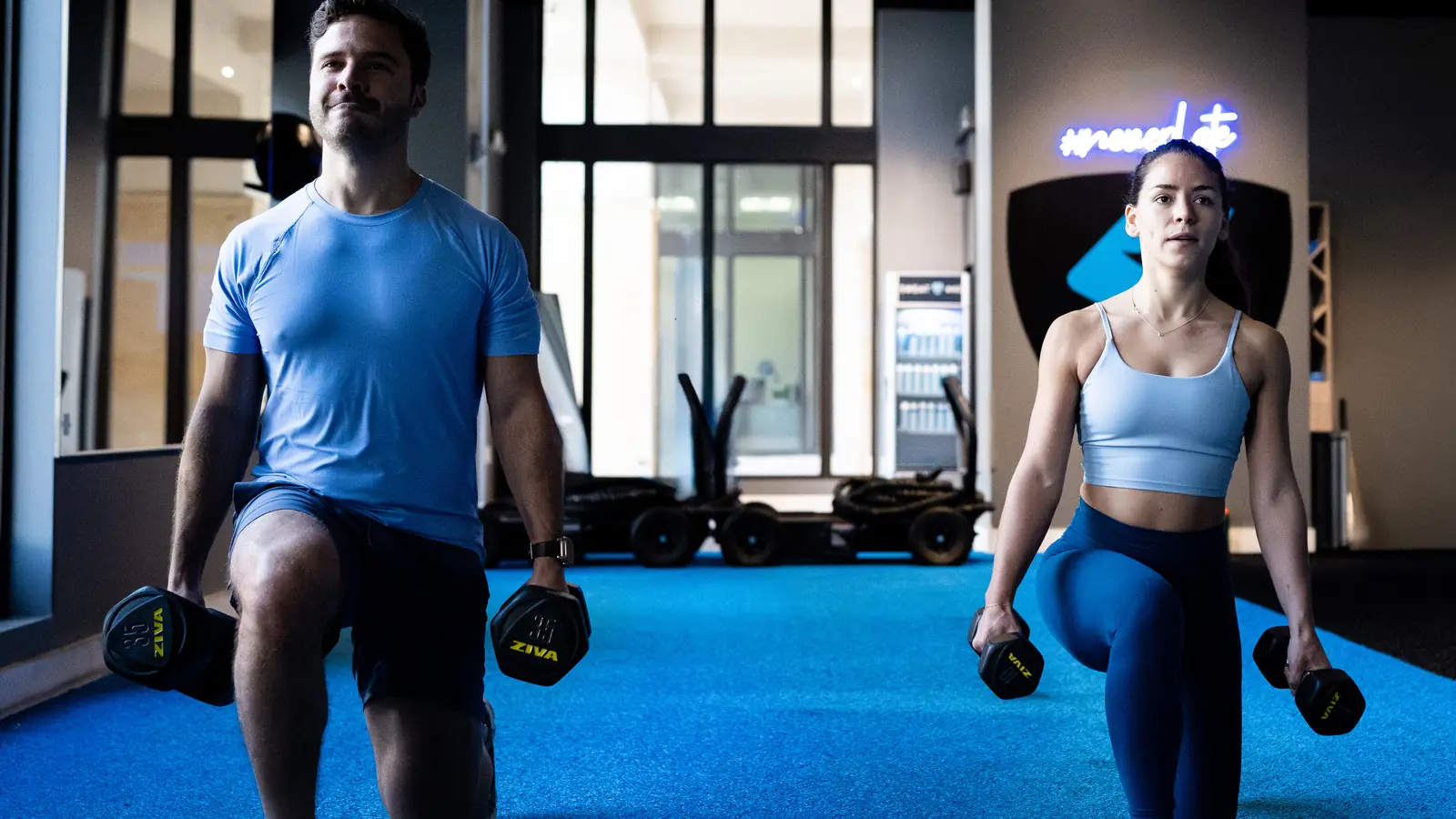
Reverse lunges and step ups challenge one leg at a time and can help develop strength on both sides of the body. Reverse lunges train the quadriceps and glutes, while step ups use a movement pattern that also resembles an everyday task such as climbing stairs.
Glute bridges and calf raises can round out your lower body training. Glute bridges emphasize hip extension and the glutes, while calf raises provide more direct work for the muscles of the lower leg. Together with the other exercises, they help create a more complete approach to strength training for legs.
What matters most is not trying to fit every exercise into every workout. Choosing a balanced combination, using appropriate resistance, and performing each movement with control gives you a foundation that can progress as your strength improves.
Can Beginners Do Strength Training for Legs?
Beginners can absolutely include leg exercises in a strength training routine. You do not need previous lifting experience or the ability to use heavy weights before you start. The better approach is to choose exercises and resistance levels that allow you to learn each movement with control.
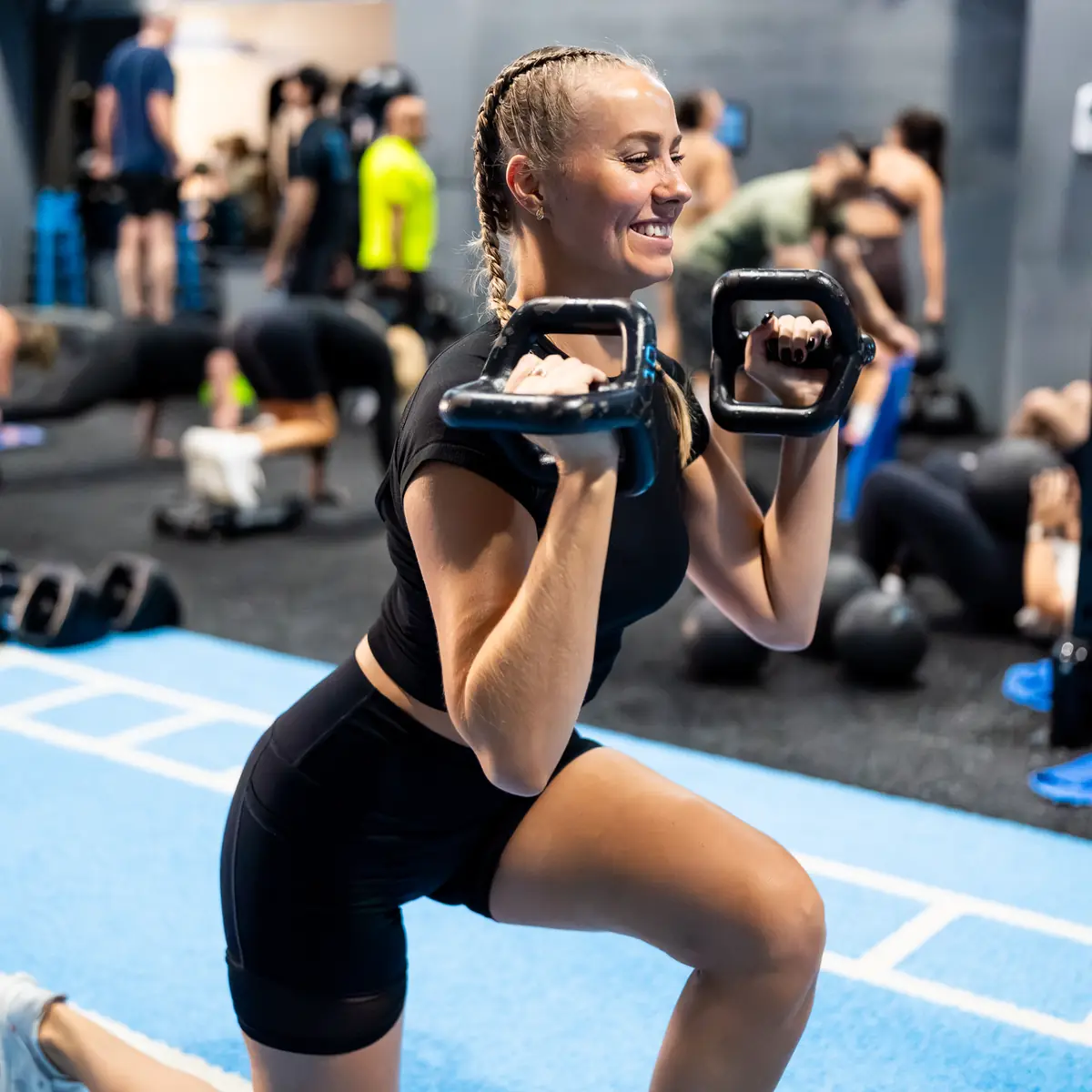
Technique should come before intensity. Movements such as squats, lunges, Romanian deadlifts, and step ups require you to coordinate several joints and muscle groups at once. Taking time to learn those movements gives you a better foundation before increasing the resistance.
The reason this works is that strength training can progress with you. A beginner might start with a simpler exercise variation, a comfortable range of motion, or lighter resistance. As the movement becomes more familiar and your strength improves, you can gradually increase the challenge.
At SWEAT440, coach led strength training gives beginners the opportunity to receive guidance and use modifications when appropriate. You can focus on learning the exercises and choosing resistance that matches your current ability while still participating in the structured 40 minute workout. You do not need to be strong before you begin strength training because building strength is the reason you are there.
How Often Should You Strength Train Your Legs?
How often you should strength train your legs depends on your experience, workout intensity, recovery, and the rest of your training routine. For many beginners, the goal should be consistent lower body training throughout the week rather than trying to complete as many leg workouts as possible.
Recovery matters because strength develops between workouts as your body responds to the training you have completed. Challenging the same muscles intensely every day can make it harder to recover properly. Giving your legs adequate recovery before another demanding session allows you to approach the next workout with better control and effort.
What most people miss is that you do not necessarily need a dedicated leg day to build stronger legs. Full body strength workouts can include squats, lunges, hinges, and other lower body exercises alongside movements for your upper body. This allows leg strength to develop as part of a more complete training routine.
As you become stronger, progression becomes just as important as frequency. You can gradually increase resistance, repetitions, range of motion, or exercise difficulty when appropriate. The goal is not simply to train your legs more often, but to train consistently and continue giving your muscles an appropriate challenge over time.
Are Squats Enough to Build Strong Legs?
Squats are one of the most useful exercises for building lower body strength, but they should not be the only exercise in your leg training routine. They challenge several major muscle groups at once, particularly the quadriceps and glutes, which makes them a valuable foundation for strength training for legs.
What squats cannot do is challenge every lower body muscle equally. Your hamstrings, glutes, calves, and other muscles contribute to different movement patterns, so relying entirely on squats can leave important parts of your lower body training underemphasized. Adding other exercises creates a more balanced approach.
That is where movements such as Romanian deadlifts, reverse lunges, step ups, glute bridges, and calf raises become useful. Each exercise challenges your lower body differently, allowing you to train through squatting, hinging, stepping, and other movement patterns rather than repeating the same exercise.
The goal is not to avoid squats or make your leg routine unnecessarily complicated. Use squats as one part of a balanced strength training program, then combine them with exercises that challenge your legs in different ways. That approach gives you more opportunities to develop strength throughout your entire lower body.
How Can SWEAT440 Help You Build Stronger Legs?
Building stronger legs requires more than completing a few difficult exercises. You need consistent strength training, appropriate resistance, good technique, and a plan that continues challenging you as you improve. Having that structure can make it easier to focus on the actual work instead of trying to design every workout yourself.
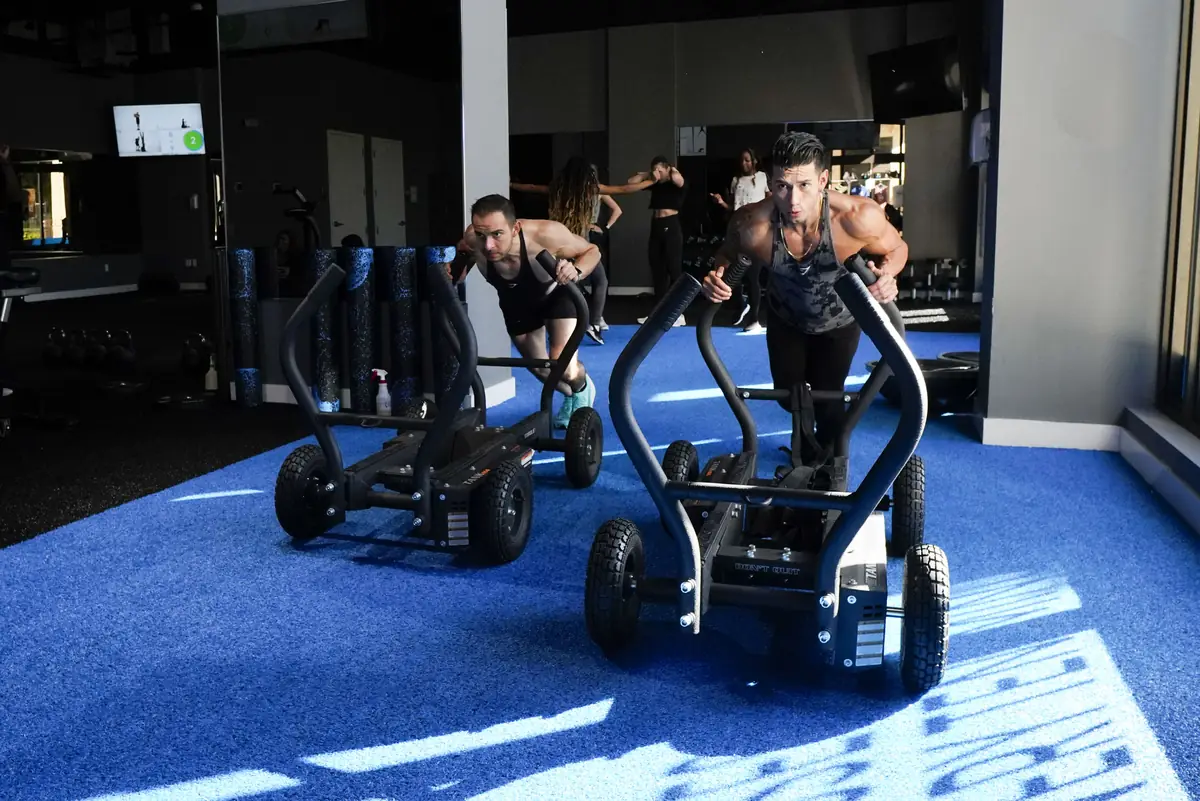
At SWEAT440, coach led strength training provides guidance while you work through a structured 40 minute workout. Coaches can help with exercise technique and modifications when appropriate, giving beginners and experienced members ways to approach movements according to their current ability.
Lower body exercises can include movements such as squats, lunges, hinges, and other strength exercises that challenge different muscles throughout your legs. Resistance and exercise variations can be adjusted as needed, allowing you to focus on performing each movement with control before increasing the challenge.
The reason this works is that stronger legs are built through consistent training rather than one perfect leg workout. SWEAT440 gives you a structured environment where you can keep showing up, training with purpose, and gradually building strength throughout your lower body as part of a complete strength training routine.
Final Takeaway: Stronger Legs Start With Consistent Strength Training
Building stronger legs does not require finding one perfect exercise or completing an exhausting leg workout every day. The most effective approach is to train the major muscles of your lower body through different movement patterns, use resistance that matches your ability, and gradually increase the challenge as you become stronger.
Exercises such as squats, Romanian deadlifts, reverse lunges, step ups, glute bridges, and calf raises can all contribute to a balanced lower body routine. Each movement has a different role, which is why combining exercises can give your quadriceps, hamstrings, glutes, and calves opportunities to develop together.
Consistency is what turns those individual workouts into progress. Focus on controlled technique, appropriate resistance, adequate recovery, and gradual progression rather than trying to do too much too quickly. As your strength improves, your training can continue progressing with you.
At SWEAT440, structured 40 minute, coach led strength training gives you a clear plan for putting those principles into practice. You can focus on performing the movements, choosing an appropriate challenge, and building strength over time without having to plan every workout yourself.
Book your first class free and experience the difference.