A kettlebell workout can give you a practical way to build strength using one versatile piece of equipment. Kettlebells can provide resistance for squats, hinges, lunges, rows, presses, and other movements that challenge major muscle groups throughout your body.
You do not need complicated exercises to get started. Fundamental strength movements, appropriate resistance, controlled technique, and gradual progression can create a strong foundation for a beginner kettlebell workout.
What Is a Kettlebell Workout?
A kettlebell workout uses kettlebells as resistance during strength exercises. Because a kettlebell has a handle above the weight, you can hold and position it in different ways depending on the movement. That makes kettlebells useful for a wide range of exercises within a strength training routine.
You can use kettlebells for lower body movements such as goblet squats, deadlifts, and reverse lunges. They can also provide resistance for upper body exercises such as rows and shoulder presses. Combining these movements gives you a straightforward way to train several major muscle groups within one workout.
What most people miss is that using a kettlebell does not automatically make a workout effective. Exercise selection, appropriate resistance, technique, and progression still matter. A good kettlebell workout gives each exercise a purpose rather than adding movements simply because they can be performed with a kettlebell.
For beginners, that can mean starting with controlled strength exercises and becoming comfortable handling the kettlebell before moving toward more technical movements. Building that foundation gives you an opportunity to develop strength while learning how to use the equipment with greater confidence and control.
What Are the Best Kettlebell Exercises?
The best kettlebell exercises depend on your experience and training goals, but beginners can build a strong foundation with a few fundamental movements. Combining squats, hinges, rows, lunges, and presses allows you to challenge different muscle groups while learning how to control the kettlebell in different positions.
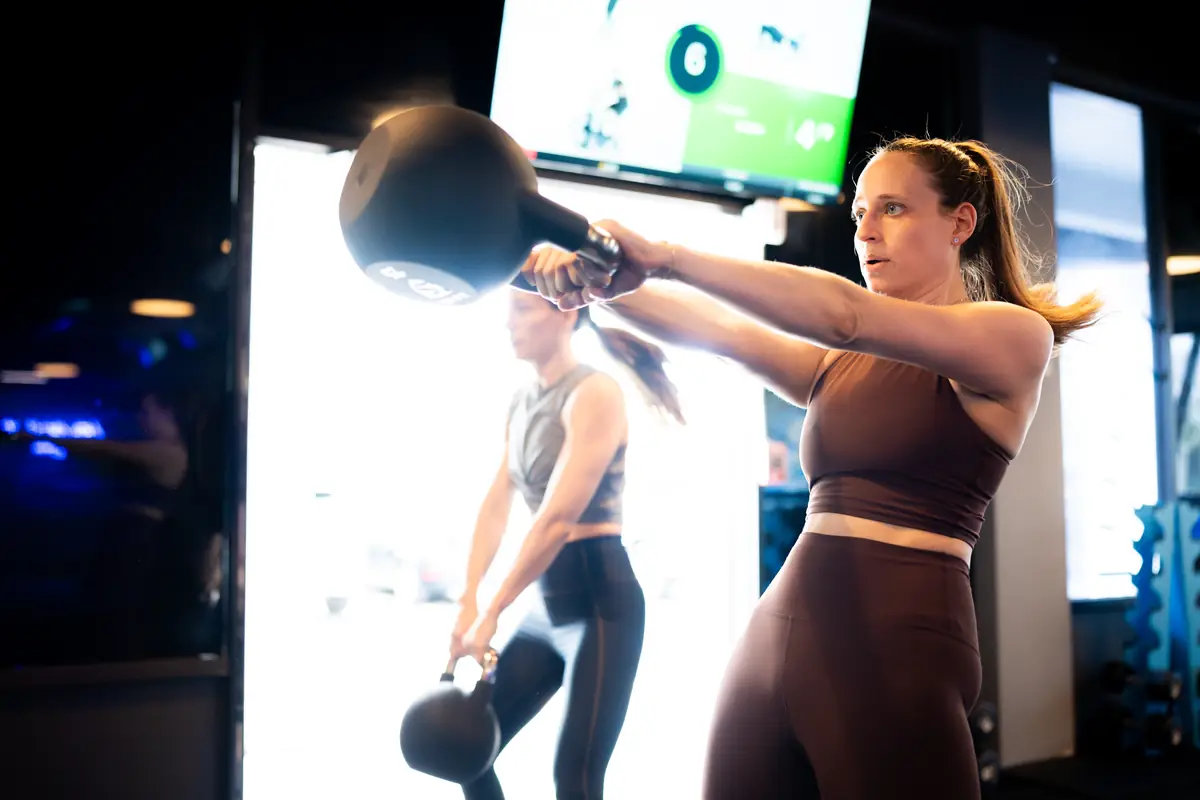
Kettlebell goblet squats challenge your quadriceps and glutes while keeping the kettlebell in front of your body. Hold the kettlebell securely near your chest as you lower into the squat, then return to standing with control. Choose a range of motion that allows you to maintain a comfortable and controlled position.
Kettlebell deadlifts introduce the hip hinge and challenge your glutes and hamstrings. Focus on moving through your hips while keeping the kettlebell controlled throughout the exercise. Learning this movement can also help establish a foundation before attempting more technical kettlebell exercises.
Kettlebell rows add an upper body pulling movement to your workout. The exercise challenges muscles throughout your back while requiring you to maintain a stable position as you move the kettlebell. Use a resistance that allows you to complete each repetition without relying on momentum.
Kettlebell reverse lunges challenge your lower body one side at a time. Depending on your experience, you can hold the kettlebell close to your chest or in another controlled position while stepping backward into the lunge. Focus on maintaining your balance and controlling both the lowering and returning portions of the movement.
Kettlebell shoulder presses provide an upper body pressing exercise. Start with a resistance you can control as you press the kettlebell overhead and return it to the starting position. The goal is not simply to move the heaviest kettlebell possible, but to perform each repetition with purposeful technique.
The reason these exercises work well together is that they give your kettlebell workout a clear structure. You have a squat, a hinge, a pull, a single leg movement, and a press. Together, those movements create a practical foundation for a full body workout.
What Does a Beginner Kettlebell Workout Look Like?
A beginner kettlebell workout does not need to include complicated exercises to challenge your entire body. A simple routine can combine a goblet squat, deadlift, row, reverse lunge, and shoulder press. Together, these exercises give you several fundamental movement patterns while helping you become more comfortable using a kettlebell.
| Exercise | Sets | Repetitions |
|---|---|---|
| Kettlebell goblet squat | 2 to 3 | 8 to 12 |
| Kettlebell deadlift | 2 to 3 | 8 to 12 |
| Kettlebell row | 2 to 3 | 8 to 12 each side |
| Kettlebell reverse lunge | 2 to 3 | 8 to 12 each side |
| Kettlebell shoulder press | 2 to 3 | 8 to 12 each side |
For many beginners, 2 to 3 sets of 8 to 12 repetitions can provide a practical starting point for these strength exercises. For movements performed one side at a time, such as rows, reverse lunges, and shoulder presses, you can complete the planned repetitions on each side. Your starting point may vary depending on the exercise, your experience, and the resistance you are using.
Choosing the appropriate kettlebell is important because the same weight may not be suitable for every exercise. You might be comfortable using more resistance for a deadlift than for a shoulder press. Instead of trying to use one kettlebell for everything, choose resistance that allows you to maintain control throughout each movement.
The goal of a beginner kettlebell workout is not to make every exercise as difficult as possible. Focus first on learning the movements and completing purposeful repetitions with good technique. As those exercises become more manageable, you can gradually increase the resistance or difficulty so the workout continues to challenge you.
Can You Get a Full Body Workout With Kettlebells?
Yes, kettlebells can be used to create a full body strength workout. The key is choosing exercises that challenge different muscle groups and movement patterns rather than performing several variations of the same movement. A simple combination of lower body and upper body exercises can create a balanced routine.
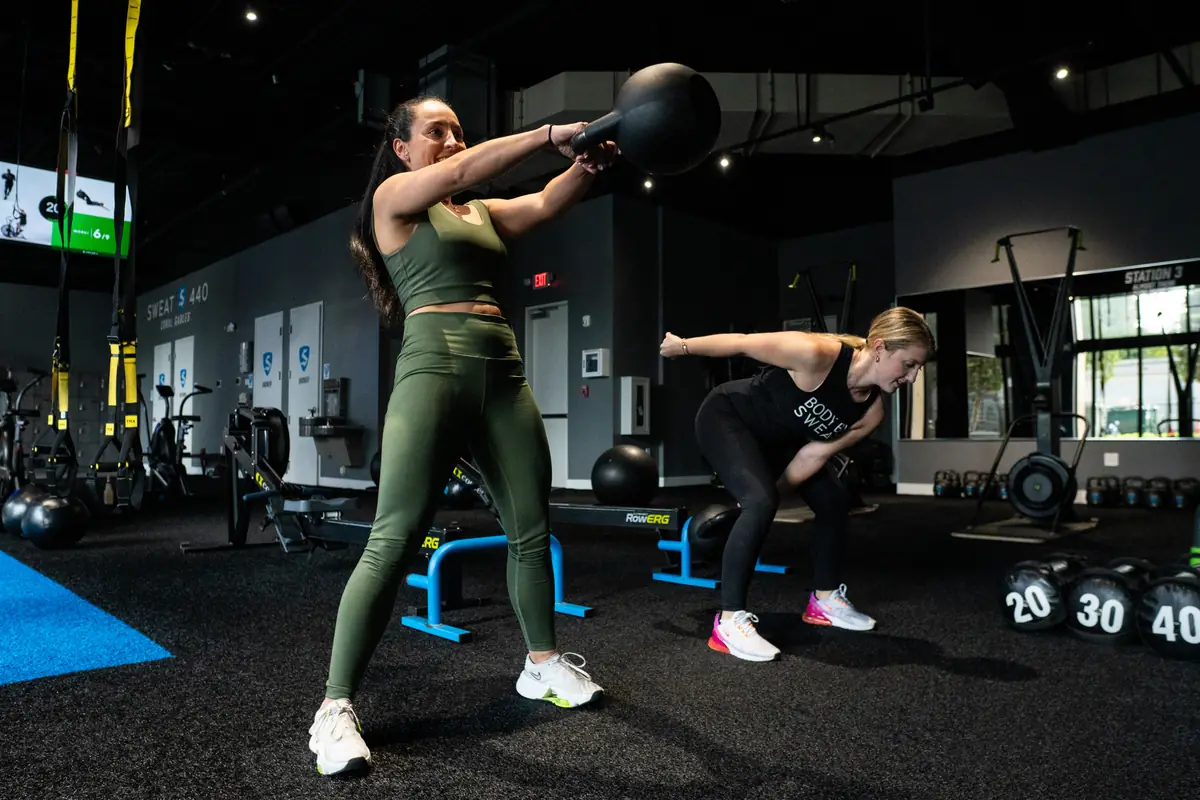
For your lower body, kettlebell goblet squats, deadlifts, and reverse lunges can challenge your glutes, quadriceps, and hamstrings. These exercises also give you different ways to train your lower body because squats, hinges, and lunges each involve a different movement pattern.
For your upper body, kettlebell rows provide a pulling movement while shoulder presses provide a pressing movement. Many kettlebell exercises also require you to maintain a stable body position while controlling the resistance. That makes technique and control important throughout the workout, not just during one particular exercise.
What most people miss is that a full body kettlebell workout does not need to be complicated. A squat, hinge, pull, single leg movement, and press can give your workout a clear purpose without filling it with unnecessary exercises. As you become stronger and more comfortable with the movements, you can gradually adjust the resistance or exercise difficulty.
What Kettlebell Weight Should a Beginner Use?
There is no single kettlebell weight that is right for every beginner. Your appropriate starting resistance depends on your current strength, experience, and the exercise you are performing. Instead of choosing a kettlebell based on a universal recommendation, focus on finding resistance you can control throughout the movement.
The exercise itself makes a significant difference. You may be able to use a heavier kettlebell for a deadlift or goblet squat than you can for a shoulder press. That is why you should not feel like you need to use the same kettlebell for every exercise in your workout.
A useful starting weight should provide enough resistance to make the exercise challenging without causing your technique to break down. If you are struggling to maintain control or complete the movement comfortably, reducing the resistance can give you a better opportunity to practice the exercise. If every repetition consistently feels easy, you may eventually be ready to increase the resistance.
The reason this approach works is that resistance should match both the exercise and your current ability. As your strength and technique improve, you can gradually move toward heavier kettlebells when appropriate. Progress is not about choosing the heaviest kettlebell you can move, but about increasing the challenge while maintaining purposeful technique.
How Many Sets and Reps Should You Do With Kettlebells?
For beginners, 2 to 3 sets of 8 to 12 repetitions can provide a practical starting point for many kettlebell strength exercises. The exact number can vary depending on the exercise, resistance, and your current training experience. For exercises performed one side at a time, you can complete your planned repetitions on each side.
The kettlebell you choose should make the set challenging while still allowing you to maintain control. If your technique starts to change simply so you can finish the planned repetitions, the resistance may be too challenging. If every repetition consistently feels easy, you may eventually be ready to increase the resistance.
That matters because completing more repetitions is not automatically better. A controlled set of goblet squats, deadlifts, rows, lunges, or presses gives you a stronger foundation for progression than adding repetitions while sacrificing technique.
As your strength improves, you can gradually increase the challenge. That might mean using a heavier kettlebell, completing more controlled repetitions within your planned range, or progressing to an appropriate exercise variation. You do not need to change everything at once for your kettlebell workout to keep moving forward.
How Do You Progress a Kettlebell Workout?
A kettlebell workout should gradually become more challenging as your strength and technique improve. If you continue performing the same exercises with the same resistance and repetitions indefinitely, those exercises may eventually provide less of a challenge. Progression gives your training room to develop with your ability.
Increasing resistance is one straightforward way to progress. When you can consistently complete your planned repetitions with good technique and the kettlebell feels manageable, you may be ready to use a heavier kettlebell. The increase does not need to be dramatic to make the exercise more challenging.
Progress can also come from improving your technique and control. You might perform more controlled repetitions within your planned range or eventually progress to an appropriate exercise variation. These changes allow you to increase the difficulty without trying to make every part of your workout harder at the same time.
What matters most is consistency. You do not need to replace your entire kettlebell workout every few weeks to continue building strength. Practicing fundamental movements, paying attention to your technique, and gradually increasing the challenge can give you a clear path for continued progress.
How Does SWEAT440 Incorporate Kettlebells Into Strength Training?
Kettlebells can be a useful tool within a structured strength training program because they provide resistance for a wide variety of movements. Exercises such as squats, deadlifts, lunges, rows, and presses can all be performed with kettlebells when they fit the workout. The equipment is only one part of the equation because exercise selection, resistance, technique, and progression still determine how you approach each movement.
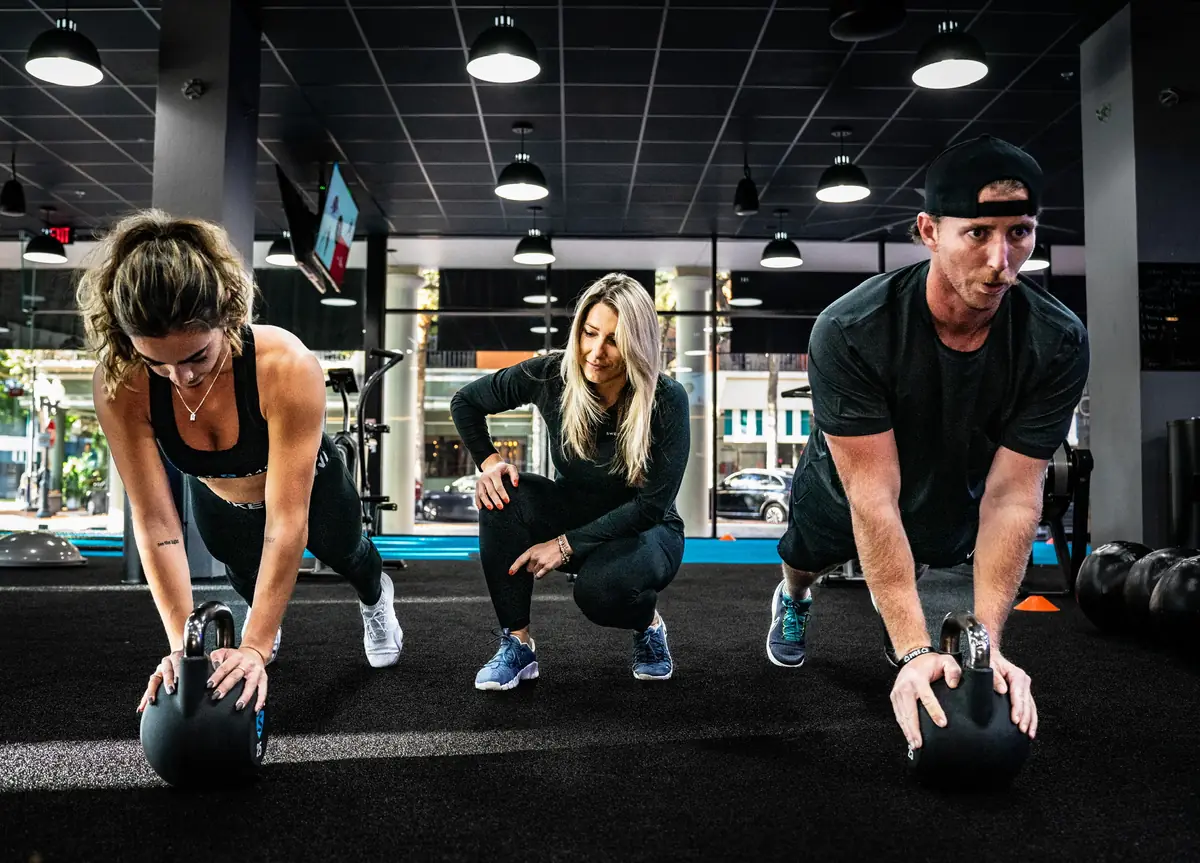
At SWEAT440, structured 40 minute, coach led strength training allows you to focus on performing the workout rather than designing every session yourself. When kettlebells are incorporated into a workout, coaches can provide form cues and modifications when appropriate so you can approach the exercise according to your current ability.
Kettlebells can also be used alongside other strength training equipment rather than becoming the sole focus of every workout. That gives you opportunities to experience different forms of resistance while training your lower body, upper body, and core as part of a balanced strength routine.
The reason this approach works is that the goal is not simply to become better at using one piece of equipment. Kettlebells are another way to add resistance to purposeful movements and continue developing your strength. Within a structured training environment, you can focus on performing those movements with control and progressing as your ability improves.
Final Takeaway: Build Strength With a Consistent Kettlebell Workout
A kettlebell workout does not need complicated movements or a long list of exercises to be effective. Fundamental movements such as goblet squats, deadlifts, rows, reverse lunges, and shoulder presses can give you a practical way to challenge your upper and lower body with resistance.
The key is choosing kettlebell weights that match both the exercise and your current ability. Focus on controlled technique first, then gradually increase the resistance, repetitions, or exercise difficulty as you become stronger. That gives your workout a clear path for progression without requiring you to constantly change your routine.
Consistency also matters more than trying to make every workout as difficult as possible. Regularly practicing fundamental strength movements gives you opportunities to improve your technique and gradually take on greater challenges. Over time, those small improvements can help your kettlebell workout develop alongside your strength.
At SWEAT440, structured 40 minute, coach led strength training gives you a clear workout while allowing different equipment, including kettlebells, to support purposeful strength exercises when appropriate. You can focus on moving with control, challenging yourself at the right level, and continuing to build strength as part of a balanced routine.
Book your first class free and experience the difference.